

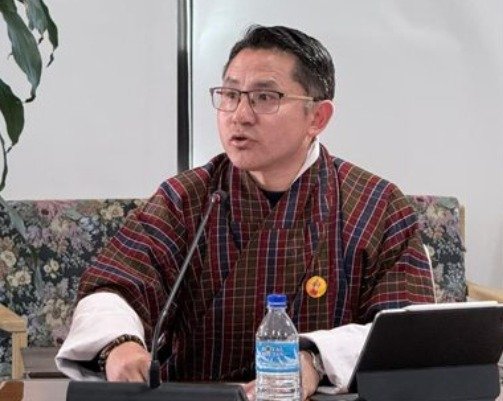
The Ministry of Agriculture and Livestock (MoAL) has acknowledged and taken seriously the concerns related to hoarding, price competition from Indian potatoes, and low demand for small-sized Bhutanese potatoes, following the minister’s visit to the Food Corporation of Bhutan Limited (FCBL) Auction Yard.
Based on last year’s higher prices, many farmers withheld their potato stocks for more than two months in anticipation of better late-season prices, despite repeated advisories from FCBL since April 2025. Market conditions were further affected by the early arrival of new potato harvests from neighbouring Indian states such as West Bengal from early December 2025. Buyers preferred fresher and cheaper Indian potatoes over stored Bhutanese potatoes, leaving Indian traders with unsold Bhutanese stocks of about 625 metric tonnes.
These challenges were compounded by a general weakness in the Indian potato market during the season. Prices across all grades declined sharply between November and December, with reductions of 40 to 60 percent depending on size and quality. This significantly reduced export opportunities for Bhutanese potatoes. Additionally, Indian farmers are increasingly sourcing seed potatoes from specialized producers in Punjab, offering higher germination assurance and productivity.
To address the situation, the Ministry implemented several immediate measures. A Joint Potato Awareness Campaign was conducted by FCBL and the Department of Agricultural Marketing and Cooperatives across five dzongkhags and 12 gewogs, reaching over 1,173 potato growers between 15th April and 21st May 2025. The campaign focused on timely delivery to auction yards, discouraging hoarding, proper curing of potatoes, and auction procedures, including online platforms.
In the medium term, the ministry plans to conduct a comprehensive assessment of potato markets in Assam, Bengal, and other key producing regions in India to better understand market dynamics, technological developments, and buyer preferences. In the long term, the ministry emphasized the need to diversify export markets to reduce overdependence on a single market, while maintaining India as Bhutan’s most important trading partner and exploring complementary markets such as Bangladesh, Nepal, and beyond.