

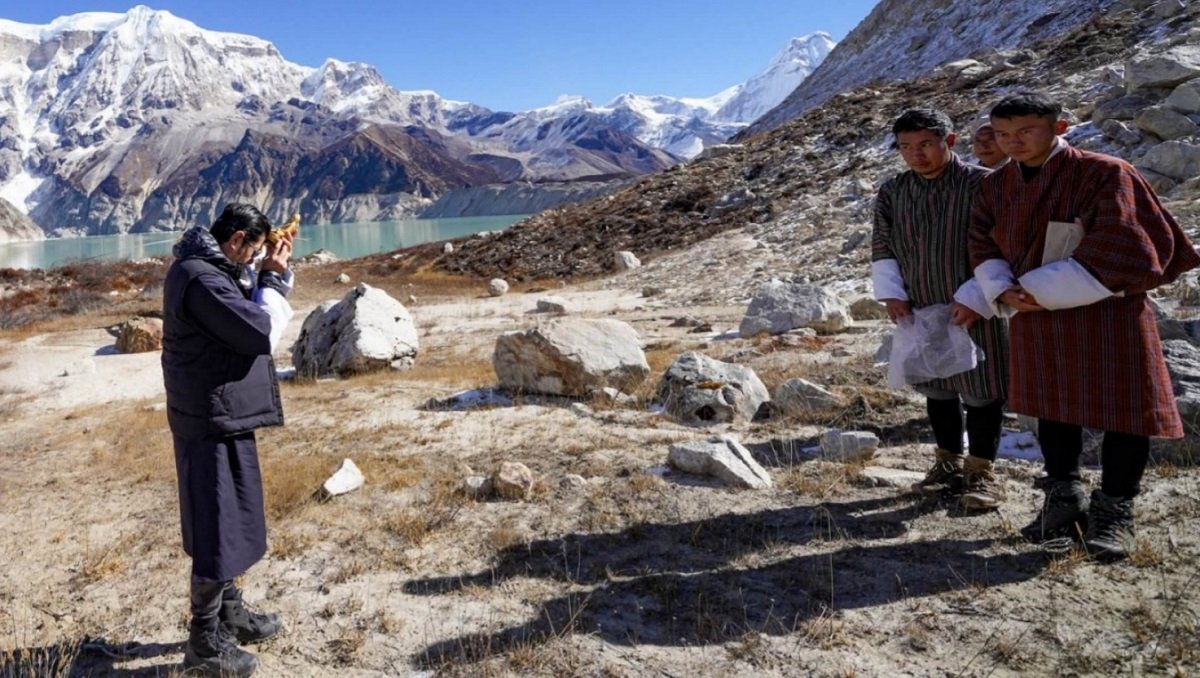
Bhutan’s King Jigme Khesar Namgyel Wangchuck visited the northern glacial lakes of Lunana and Laya on November 13, 2026, to assess glacial flood risks and review the country’s monitoring and early-warning systems following the recent Shintaphu glacial lake outburst flood (GLOF).
The King was accompanied by Prime Minister Tshering Tobgay and glaciologist Karma Toeb of the National Center for Hydrology and Meteorology (NCHM). During the visit to Lunana, His Majesty surveyed Luggye Tsho, Thorthormi Tsho and Raphstreng Tsho, which are considered potentially dangerous due to their water volumes and unstable natural barriers. Experts have expressed concerns that a breach at Thorthormi Lake could trigger a cascading flood into Raphstreng Lake and threaten downstream communities.
Luggye Tsho, the site of Bhutan’s deadliest recorded glacial lake outburst flood in 1994, was also inspected. The disaster killed 21 people and caused extensive damage along the Pho Chhu river system. The King also met NCHM field technicians Jigme Lhendup and Nidup Dorji, who monitor lake conditions, maintain early-warning equipment and send river-level and weather updates to headquarters every three hours despite the challenging high-altitude terrain.
In Laya, His Majesty visited Shintaphu Tsho, where a glacial lake outburst occurred on October 29, damaging roads, bridges and public infrastructure in Gasa and Punakha. The disaster also destroyed the popular Gasa Tshachu hot-spring complex. Bhutan’s 2026 glacial lake inventory identified 620 glacial lakes across the country, including 17 classified as potentially dangerous. The royal visit highlighted the importance of continuous scientific monitoring, reliable early-warning systems and improved preparedness to protect vulnerable communities and infrastructure from future glacial disasters.