

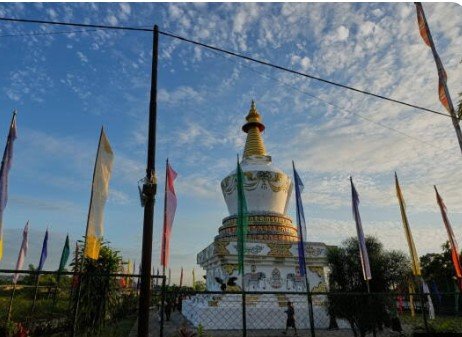
In a remarkable display of collective devotion and national unity, tens of thousands of volunteers gathered in Bhutan’s emerging Gelephu Mindfulness City to construct 108 Buddhist stupas along a 12-kilometer riverbank situated near the Indian border. More than 40,000 dedicated volunteers commenced work shortly after midnight to install the 15-meter-tall sacred monuments on Sunday, drawing an extraordinary crowd of roughly 200,000 attendees, representing nearly one-fourth of the Himalayan kingdom’s entire population. Conceived by King Jigme Khesar Namgyel Wangchuck and master-planned by renowned Danish architects, the Gelephu Mindfulness City is a visionary economic hub designed to stimulate sustainable growth, attract international investment, and curb youth migration abroad. Anchored by an international airport scheduled to open in 2029, the special administrative region will also be directly linked to India’s railway network in neighboring Assam, reinforcing cross-border trade and regional connectivity. Complementing this ambitious infrastructure push, Bhutan’s Department of Tourism announced the extension of its existing 50 percent waiver on the standard USD 200 Sustainable Development Fee for international visitors from countries other than India through December 31, 2029. By maintaining the discounted daily levy for several more years, authorities aim to sustain post-pandemic tourism recovery, encourage longer stays, and align global visitor arrivals with the anticipated opening of the Gelephu international airport. Meanwhile, inside parliament, lawmakers raised pressing concerns over domestic regional equity as members questioned the implementation timeline of the National Highland and Border Community Development Programme yesterday. Legislators warned that the absence of clear operational deadlines and dedicated funding mechanisms could seriously undermine government efforts to revitalize remote highland settlements that have been grappling with steady depopulation and limited economic opportunities. Emphasizing that balanced national development requires urgent action in peripheral areas alongside flagship urban projects, parliamentarians urged ministers to establish concrete benchmarks for delivering infrastructure and livelihood support to highland residents. Adding to the wave of national pride sweeping across the country this week, Bhutan’s national football team achieved a historic sporting milestone by reaching the semifinals of the SAFF Championship for the first time in 18 years, setting up a high-stakes knockout clash against regional powerhouse India. Taken together, these unfolding events highlight a pivotal chapter in Bhutan’s modern trajectory, where deep-rooted spiritual traditions, bold economic planning, tourism incentives, parliamentary accountability, and sporting triumph converge to shape the kingdom’s future both at home and across the broader South Asian region.