

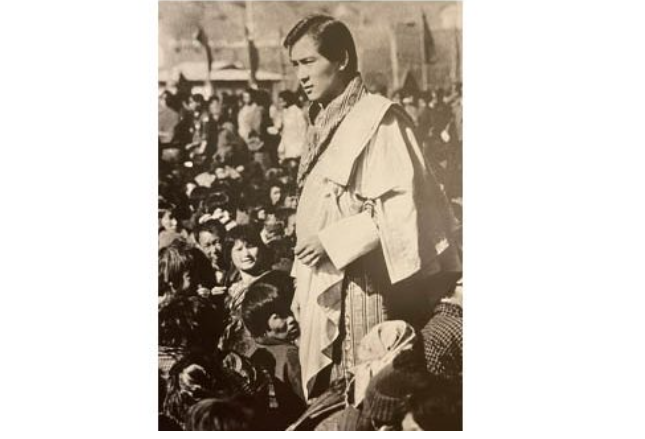
Agency: When His Majesty The Fourth Druk Gyalpo Jigme Singye Wangchuck first introduced the idea of Gross National Happiness (GNH) in the early 1970s, His Majesty was just a teenager.
Even as a young Monarch, he questioned the conventional belief that economic growth alone could guarantee the well-being of a nation. For him, true progress could only be measured by the happiness of the people, and development had to be guided by compassion, equity, and collective well-being.
Bhutan’s focus on happiness has deep historical roots. The kingdom’s legal code of 1629 declared that “if the government cannot create happiness for its people, there is no purpose for the government to exist.”
This timeless principle reflected Bhutan’s Buddhist ethos, an aspiration to cultivate compassion and prioritize the welfare of all sentient beings. Development, therefore, was never about material prosperity alone, but about creating a society that thrives emotionally, spiritually, and culturally in harmony with nature.
Modern research has since validated what Bhutan’s leaders understood long ago: wealth alone does not ensure life satisfaction. Happiness depends on balance, between material progress and inner contentment, between economic ambition and environmental responsibility.
Over the years, GNH has grown beyond a philosophical idea; it has become Bhutan’s guiding compass for development. Every national policy is evaluated through the lens of GNH, ensuring that development enhances people’s well-being while safeguarding the country’s values and environment. This approach has shaped Bhutan’s progress in multiple ways.
In governance, GNH has promoted good governance, equity, and accountability, encouraging leaders to prioritize public service over political gain. The decentralization policies initiated under His Majesty empowered communities to make decisions for their own development, laying the foundation for a participatory democracy deeply rooted in Bhutanese values.
In the social sector, GNH has driven major improvements in education and healthcare. Today, every Bhutanese has access to free schooling and healthcare, a reflection of His Majesty’s belief that happiness cannot exist without physical and mental well-being.
Over time, these policies have produced a healthier, more literate population, reduced poverty, and improved the quality of life across rural and urban Bhutan.
GNH has also placed Bhutan at the forefront of environmental conservation. The Constitution mandates that at least 60 percent of Bhutan’s land remain under forest cover, making the country not just carbon-neutral but carbon-negative.
Forests, rivers, and biodiversity are not seen as resources to exploit, but as treasures to protect for future generations, a vision that aligns perfectly with the GNH pillar of environmental preservation.
Economically, Bhutan has focused on balanced, sustainable growth rather than rapid industrialization. Investments in hydropower, eco-tourism, and organic farming generate income while respecting the environment.
This approach has helped Bhutan maintain stability and avoid many social and environmental challenges faced by nations driven purely by GDP.
Internationally, GNH has become Bhutan’s unique identity, a development philosophy that continues to shape national policies and global perceptions. During a TED Talk in Vancouver in 2016, Prime Minister Dasho Tshering Tobgay reminded the world of the timeless wisdom of the Fourth Druk Gyalpo, quoting His Majesty: “Gross National Happiness is more important than Gross National Product.”