

Agency: A traditional challenge for Bhutan’s energy sector is that it is hydropower dependent, which means that while it has excess energy in the summer months with overflowing rivers, the reverse is the true in the winter months, with the country even having to import power.
In a bid to overcome this, Bhutan has been looking at a lot of different green options like wind, solar and even hydrogen, but now Bhutan is considering one more energy source for this mix.
Bhutan launched its National Energy Policy 2025 on 30th July 2025 which under the sub-heading ‘Other Energy Initiatives’ says “The Department of Energy shall promote the use of other energy generation sources like Small Modular Reactors (SMR) and other innovative technologies to support long-term energy security.”
Then 14 days later on 13th August 2025 the Druk Holding and Investments (DHI) in its 10x Roadmap for DHI under the ‘Energy Resources’ section, mentions the need for a hybrid energy generation strategy for long term energy security in addition to hydro and solar, and talks about global advances in nuclear power, especially small modular reactors apart from geo thermal, hydrogen, grid scale batteries, etc.
It talks of considering SMRs for baseload generation as the technology matures to diversify power generation, mitigating climate change risks and future-proofing energy security, efficiency and grid security.
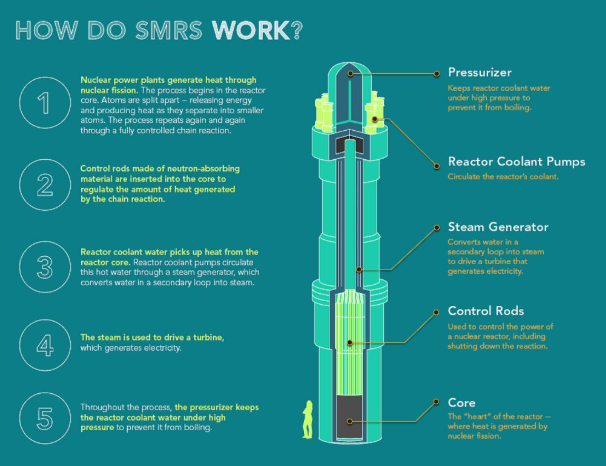
The International Atomic Energy Agency (IAEA) says SMRs are advanced nuclear reactors of a smaller size.