

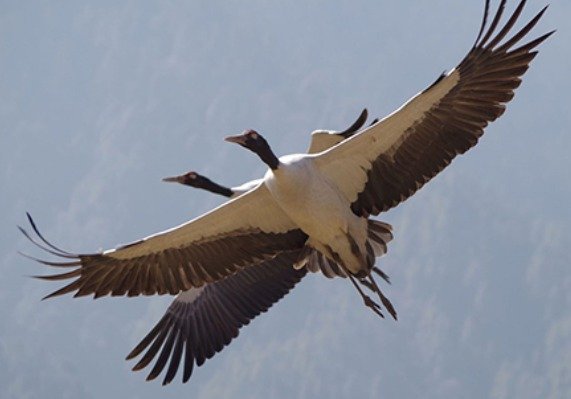
The Department of Tourism, Ministry of Industry, Commerce and Employment (MoICE), together with the Trashiyangtse Dzongkhag Administration, announced that the Black-necked Crane Farewell Festival (BNCFF) 2026 will be held on 5th to 6th February 2026 in Bumdeling valley and Chorten Kora, Trashiyangtse. The festival provides travelers with a rare opportunity to witness the graceful departure of the endangered and rare Black-necked Cranes as they begin their summer migration and to see these majestic birds up close.
Bumdeling Valley is home to approximately 50–60 Black-necked Cranes each winter. These birds are highly revered in Bhutanese culture, symbolizing harmony between humans and nature. The festival emphasizes Bhutan’s commitment to conservation while giving visitors a chance to experience the rich cultural traditions of eastern Bhutan.
Trashiyangtse is known for its pristine landscapes, vibrant communities, and rich cultural heritage. The district provides travelers with an authentic experience of eastern Bhutanese life, traditional arts, and breathtaking natural scenery. Bumdeling Valley, located within the Bumdeling Wildlife Sanctuary, is a haven for the cranes and other rare species, making it a prime destination for nature and wildlife enthusiasts.
Damcho Rinzin, the Director of the Department of Tourism, said, “The Black-necked Crane Farewell Festival provides a unique opportunity to witness one of Bhutan’s most extraordinary wildlife events. Visitors can enjoy the natural beauty and culture of Trashiyangtse while supporting local communities and conservation efforts. This festival reflects Bhutan’s commitment to sustainable, high-value tourism.”
Travelers can reach Trashiyangtse via Yonphula Domestic Airport, followed by a scenic drive to Bumdeling Valley. Accommodation options include hotels, homestays, and nature-based lodges, and visitors are encouraged to book through authorized Bhutanese tour operators.
The Black-necked Crane Farewell Festival 2026 provides travelers with an extraordinary experience to witness a rare natural phenomenon, engage with local culture, and contribute to wildlife conservation and community development.