

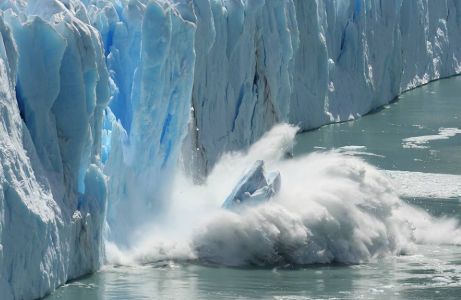
As of early 2026, the world has formally entered what United Nations scientists describe as an “era of global water bankruptcy,” a post-crisis reality where the planet’s “frozen assets”—our glaciers—are liquidating at an uncontrollable rate. For decades, glaciers have functioned as the world’s premier natural water banks, sequestering winter snowfall and releasing it as life-sustaining meltwater during the hottest, driest months. However, a landmark report released in late 2025 by UNESCO and UN-Water warns that this reliable hydrological infrastructure is collapsing. With nearly 70% of the Earth’s freshwater stored in ice, the rapid retreat of these “water towers” is not merely an environmental spectacle but a fundamental threat to the water security of over two billion people who depend on mountain runoff for drinking, sanitation, and survival.
The transition into a post-glacial world is characterized by a deceptive and dangerous phenomenon known as “peak water.” In the short term, accelerated melting creates a temporary illusion of abundance, swelling river basins and briefly boosting hydropower potential. Yet, once this peak is passed, the runoff begins a permanent decline, leaving downstream infrastructure—dams, irrigation networks, and municipal water systems—functionally obsolete. In regions like the Hindu Kush Himalayas and the Andes, this shift is already disrupting the predictable cycles required for two-thirds of the world’s irrigated agriculture. The volatility of these flows means that water often arrives too early in the season, failing to align with crop demand and leading to a paradoxical increase in both flash floods and prolonged droughts.
Beyond the visible surface flows, the melting of glaciers is destabilizing “hidden” water banks: the underground aquifers. In many proglacial regions, glacial meltwater provides critical recharge to groundwater systems that sustain local communities long after the surface rivers run dry. As glaciers retreat to higher elevations or disappear entirely, this natural recharge mechanism fails, causing groundwater levels to plummet and increasing the risk of saline intrusion in coastal aquifers. This loss of natural water capital is estimated to put nearly $4 trillion in global GDP at risk by 2050, affecting everything from nuclear power plant cooling in Europe to the vast agricultural belts of South Asia and North America.
Addressing this systemic failure requires a shift from viewing water as a renewable commodity to treating it as a finite, strategic asset. Global experts are now calling for “hydro-diplomacy” and massive investments in adaptive infrastructure, such as decentralized water recycling and sustainable desalination, to compensate for the loss of glacial storage. The fight for water security in a post-glacial world is ultimately a race to build resilience before the last of our frozen reserves vanish. Without a unified global commitment to preserving what remains of the mountain cryosphere and managing the “bankruptcy” of our hydrological systems, the stability of the modern world’s food, energy, and social systems remains precariously balanced on a thinning sheet of ice.