

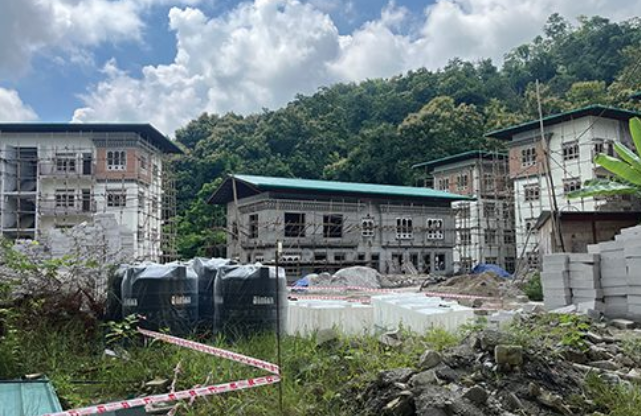
Agency: The Green and Resilient Affordable Housing Sector Project (GRAHSP) is rolling out inclusive and sustainable housing in three locations, Samdrup Jongkhar Toed, Phuentsholing’s Core LAP Rabten, and Nganglam, integrating features that ensure accessibility for women, children, and people with disabilities.
In Samdrup Jongkhar Toed, 11 buildings are under construction, each with eight housing units. The contract, valued at Nu 281.2 million (mn), has been awarded to Penjore Construction. In Phuentsholing’s Core LAP Rabten, eight buildings with a total of 166 units are being constructed by M/s PLCPL-RBIPL JV at a contract value of Nu 415.7 mn. Meanwhile, Nganglam is seeing the development of eight buildings with 32 units, awarded to KD-Chhimi JV with a contract value of Nu 142.6 mn.
The project is financed by the Asian Development Bank (ADB), which has provided USD 30 mn through loans and grants. The total project cost amounts to USD 37 mn, with the remaining USD 7 mn coming from non-ADB sources.
According to the project’s Gender Equality and Social Inclusion Action Plan provided by ADB, all housing complexes are designed with elderly, women, children, and disability (EWCD)-friendly features. The ground floors are reserved for people with disabilities, supported by ramps to improve accessibility. Washrooms and service facilities on the ground floors are also designed with ramps, ensuring ease of use.
Each site will feature an Integrated Service Center (ISC), providing residents with community-based services such as counseling, skills development, and social integration activities. The ISCs are equipped with counseling rooms, a skill development room, and an integration hall. The washrooms in these centers are located on the ground floor and include ramps for disability access.
The National Commission for Women and Children (NCWC) will be involved in supporting the operation of the ISCs. After the completion of the housing sites, the centers will function as childcare facilities for working mothers, shelters for women in difficult circumstances, and hubs for livelihood and advocacy programs.
As part of the broader project framework, at least 700 households are expected to benefit from the services provided by these community centers. Awareness programs on hygiene, sanitation, disaster preparedness, and gender issues are also planned, with women expected to make up at least half of participants.