

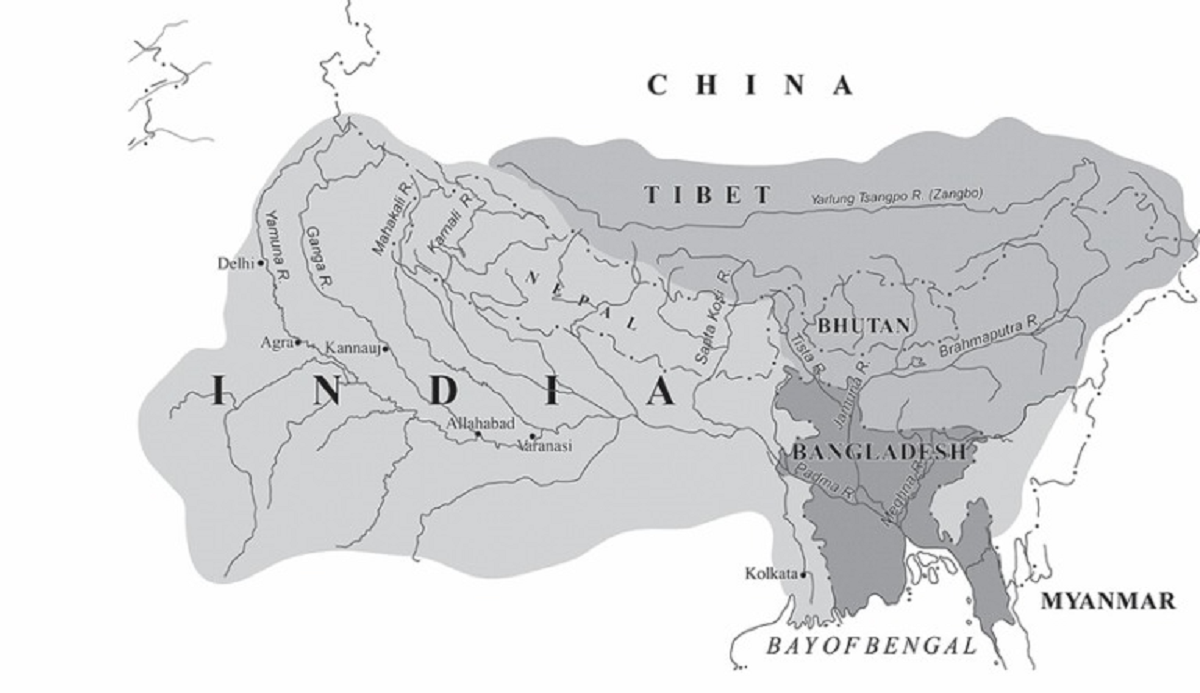
An Indian delegation, led by the Secretary of Water Resources, visited Bhutan with the aim of reinforcing bilateral cooperation concerning trans-boundary rivers. This partnership is deeply rooted in the principles of water diplomacy and involves the collaborative management of river basins that flow from Bhutan’s Himalayas into the Indian states of Assam and West Bengal. The cooperation is structured around three main pillars: hydropower generation, flood management, and the sharing of technical data.
Several key rivers that originate in the Bhutanese highlands play critical roles for both countries. The Manas River, the largest river system in Bhutan, converges with the Brahmaputra in Assam. The Sankosh River demarcates part of the border between Bhutan and India. Additionally, rivers such as the Wang Chhu (Raidak) provide support for major hydropower plants, while the Amo Chhu (Torsa) flows into West Bengal. The Punatsangchhu, a tributary of the Sankosh, is currently undergoing significant joint infrastructure development.
The hydro-diplomacy between the two nations has culminated in several notable projects. The Punatsangchhu-I and II are massive hydropower initiatives, generating 1,200 MW and 1,020 MW respectively, both facilitated by Indian assistance. The Chukha Hydropower Project, at 336 MW, represents the first substantial collaboration and has set a precedent for future ventures. Other significant projects include the Kuri Chhu and Tala Projects, which are crucial for Bhutan’s export revenue and integral to India’s power grid. Recently, the 720 MW Mangdechhu project was handed over to Bhutan, recognized for its operational efficiency.
Key features of this partnership include the establishment of a Hydro-Meteorological Network, which consists of observation stations in Bhutan aimed at delivering real-time water level data. This collaboration extends to flood forecasting mechanisms that provide early warnings to Indian states, such as Assam and West Bengal, particularly during the monsoon season. There is also a focused effort on the monitoring of melting glaciers to mitigate the risk of Glacial Lake Outburst Floods (GLOFs) that pose threats to both nations. Furthermore, Indian agencies, such as WAPCOS Ltd., play a vital role by offering technical expertise and training to enhance the capabilities of Bhutanese engineers.
The significance of this partnership is underscored by the hydropower sector’s contribution to Bhutan’s GDP and its status as the largest export to India. This arrangement allows India to benefit from clean and renewable power, which is essential for stabilizing its national energy grid.