

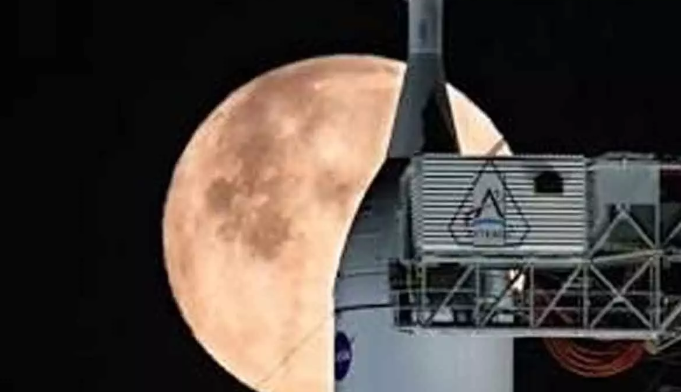
NASA has officially rescheduled the Artemis II moon mission, moving the launch from February to March 6, 2026, at the earliest. The decision follows a critical wet dress rehearsal (WDR) on Tuesday at Kennedy Space Center, where technical complications—specifically a persistent liquid hydrogen leak—interrupted the final countdown.
NASA Administrator Jared Isaacman confirmed the shift via X, noting that while the team successfully filled the SLS rocket’s tanks with nearly 700,000 gallons of propellant, the countdown was halted at the T-5 minute and 15-second mark due to an increased leak rate.
Key Takeaways: Why the Delay?
The mission management team identified several hurdles during the 48-hour simulation that require further data review and hardware adjustments:
- Propellant Leaks: Engineers encountered a liquid hydrogen leak at the core stage interface, a recurring challenge for the Space Launch System (SLS) platform.
- Spacecraft Issues: Minor delays occurred during Orion closeout operations, including a valve pressurization issue and a slower-than-expected hatch closure.
- Environmental & Ground Factors: Record-breaking cold in Florida impacted some ground cameras, while intermittent audio dropouts affected communication channels.
Revised Launch Opportunities
NASA is now targeting a new series of launch windows in March:
- Primary Date: March 6, 2026
- Backup Dates: March 7, 8, 9, and 11
“Safety remains our top priority,” Isaacman stated. “We will only launch when the agency and the systems are fully ready.”
Mission Profile
Artemis II will be the first crewed flight of the Artemis program, carrying astronauts Reid Wiseman, Victor Glover, Christina Koch, and Jeremy Hansen on a 10-day journey around the moon. This historic mission marks the first time humans will venture to the lunar vicinity since the Apollo 17 mission in 1972.