

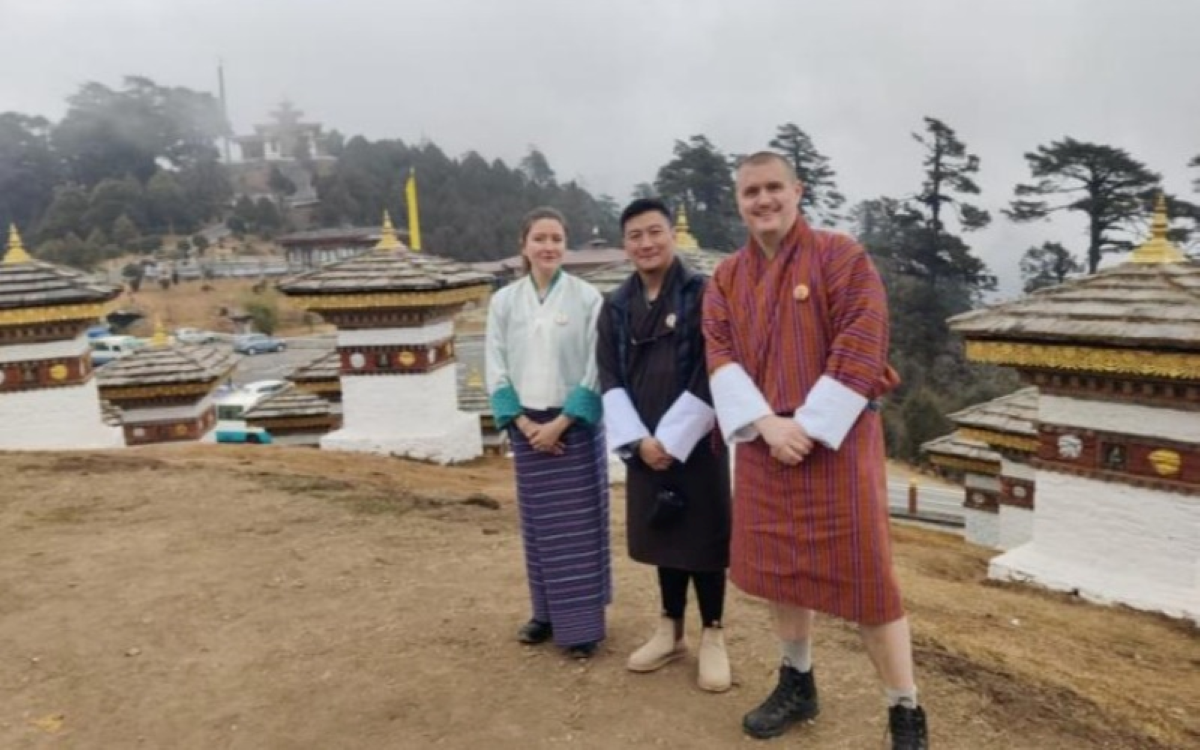
For Kinley Dorji, the journey to becoming a cultural guide was anything but straightforward. Known to many as Yongko, the Bhutanese guide says his path through business, technology and personal exploration ultimately led him back to what mattered most — Bhutanese culture, spirituality and human connection. “I’m a proud father to one son, and I have been on quite a journey to find my true calling,” he said. Dorji began his professional career in 2012 managing his family’s manufacturing business. He later worked as a Programme Lead at an international IT company while also pursuing upskilling programmes in construction and technology. Yet despite the diverse experiences, he says something always felt incomplete. That changed in 2016 when he discovered a deep passion for travel and cultural exchange. After enrolling in a guiding course, he immediately felt he had found his purpose. Today, he works as a guide with Druk Asia.
Dorji says his decision to leave business behind came from a desire to present Bhutan not simply as a tourist destination, but as a living spiritual world. “I wanted to show Bhutan through a lens of genuine compassion and care,” he explained. “Not simply as a tourist destination, but as a living spiritual world with something meaningful to offer those who arrive with an open heart.” As he guided more visitors through Bhutan, his curiosity about Buddhism, sacred art and Bhutanese iconography deepened naturally.
“Every symbol, deity and piece of sacred art carries profound meaning,” he said. “Nothing is merely decorative. Everything is intentional.” He noted that many foreign visitors initially misunderstand Bhutanese religious imagery, particularly wrathful deities often depicted in temples and monasteries. “In Bhutanese Buddhism, these forms represent fierce compassion a protective force that shields practitioners from harm and ignorance, not evil or anger as outsiders sometimes assume,” he explained. According to Dorji, witnessing travellers suddenly understand the deeper meaning behind sacred art is one of the most rewarding aspects of his work.
Despite Bhutan’s global image as a culturally rooted Himalayan kingdom, Dorji expressed concern about younger generations becoming increasingly disconnected from tradition. “Globalization has created many opportunities, but it has also brought the risk of losing our identity,” he said. He believes preserving Bhutanese culture begins within families and everyday life. Dorji says he teaches his son Buddhist prayers, traditions and the meaning behind Bhutanese customs to ensure those roots remain strong. “To me, cultural preservation means living your culture, not simply displaying it,” he said. “It means teaching your children their prayers, speaking Dzongkha at home and understanding the meaning behind the festivals and traditions you celebrate.”
Dorji also pointed to growing migration among young Bhutanese seeking opportunities abroad, particularly in countries such as Australia and Canada, as a challenge to preserving Bhutan’s living cultural identity. “Culture is not preserved only in buildings or festivals,” he said. “It lives within people.”
One misconception about Bhutan that surprises him most, Dorji says, is the expectation that the country is a perfect, untouched paradise frozen in time. “The reality is far more nuanced and, I think, far more interesting,” he said. “Bhutan is a living, evolving country. We face real challenges, real aspirations and have real people navigating modernity while honoring tradition.”
He also acknowledged that explaining Bhutanese spirituality to outsiders can be difficult because Buddhism is not simply a religion, but “a complete way of seeing, living and being in the world.”
Instead of intellectual explanations, Dorji believes visitors understand Bhutan most deeply through direct experience — standing before sacred monasteries, breathing mountain air and experiencing silence and stillness firsthand. “The experience itself becomes the teacher,” he said.
Asked what lesson Bhutan could offer the world, Dorji pointed to the country’s philosophy of mindful and sustainable living. “Many Bhutanese carry a deep sense of compassion,” he said. “Gross National Happiness is not simply a government policy; it reflects values many people genuinely try to live by.” For travellers considering a visit, Dorji offered simple advice: arrive with an open mind and leave expectations behind.
“Bhutan is not a destination built around cities, nightlife or fast-paced entertainment,” he said. “But for those seeking mountains, stillness, mindfulness, genuine human connection and a spirituality woven into everyday life, Bhutan can give you something that you will remember for the rest of your life.” Reflecting on years of guiding international visitors, Dorji says the most meaningful reward comes when guests leave Bhutan with a deeper understanding of its culture and spirituality. “When a guest leaves Bhutan understanding something they did not before,” he said, “that is the greatest reward this work can offer me.”.