

In the heart of the Himalayas, a quiet revolution is taking place—one not of politics, but of protection. Bhutan, a nation known for its focus on Gross National Happiness, is facing a modern challenge: the intersection of youth vulnerability, substance abuse, and poverty. At the forefront of this battle is Nazhoen Lamtoen, a civil society organization dedicated to guiding at-risk children from the fringes of the law back into the embrace of their communities.
The story begins with Thinley Tobgyel, a social development professional whose journey started in 2007 with street outreach in Thimphu. After witnessing the devastating effects of substance dependency and the gaps in the national support system, Tobgyel co-founded Bhutan’s first treatment and rehabilitation center. However, he soon realized that treating addiction was only a partial solution. To truly protect the youth, he needed to address the root causes of their displacement. In 2015, he founded Nazhoen Lamtoen—which translates to “guiding children and youth towards the right path.”
While many see youth delinquency as a behavioral issue, Nazhoen Lamtoen views it through the lens of economic hardship. Tobgyel argues that poverty is the primary driver of neglect and violence. To date, the organization has supported approximately 1,800 children from 300 families. Their strategy is unique: rather than keeping children in long-term institutional care, they focus on family reintegration. By establishing over 200 micro-businesses for struggling parents, Nazhoen Lamtoen empowers families to become self-reliant, ensuring that children can grow up in a safe, stable home environment.
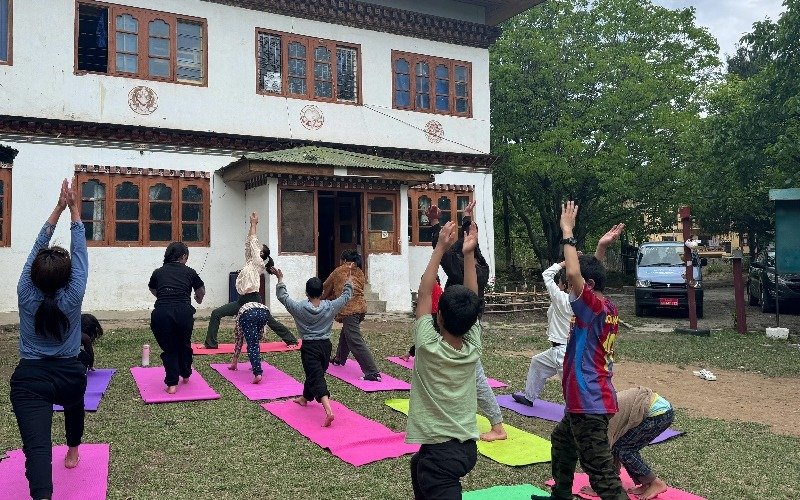
For those who cannot immediately return home, the Nazhoen Lamtoen “Halfway Home” provides a sanctuary. Here, a “good day” is defined by normalcy—schooling, play, and emotional support. The organization works hand-in-hand with government agencies like the National Commission for Women and Children (NCWC) to ensure that every child’s stay in a shelter is a transition, not a destination. The goal is clear: reintegration begins the moment a child arrives.
The impact of this work is best seen in the smiles of children who once carried the heavy burden of trauma. Whether it is helping a child return to school through a family livelihood project or providing a safe haven for a victim of neglect, Nazhoen Lamtoen is proving that with the right guidance, every child can find their way back to a hopeful future. As Thinley Tobgyel continues his mission, he reminds us that the best interest of the child is the best interest of the nation.