

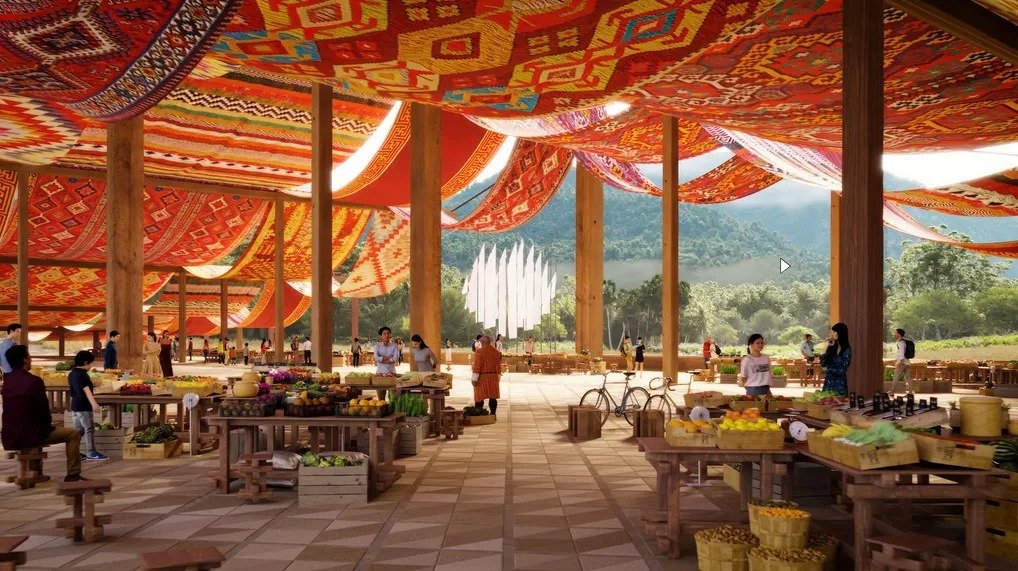
In an era dominated by traditional metrics of national power, the Kingdom of Bhutan is launching a groundbreaking experiment that challenges the global status quo. Moving beyond its renowned Gross National Happiness (GNH) framework, Bhutan is now engineering the Gelephu Mindfulness City (GMC)—a 2,500-square-kilometer Special Administrative Region that positions culture and mindfulness as strategic drivers of 21st-century diplomacy.
The GMC project, which is on Bhutan’s southern border with India, marks a big change from preserving culture to projecting it. Bhutan is using tradition as a sophisticated asset to draw in global investment and talent, rather than seeing it as a static relic. The city’s design is a great example of “visual diplomacy.” It has bridges that people can live on and use as public spaces. Each bridge is dedicated to one of the nine areas of GNH and has everything from universities and spiritual centers to hospitals and markets. The GMC project, situated on Bhutan’s southern border with India, represents a pivotal shift from cultural preservation to cultural projection. Rather than treating tradition as a static relic, Bhutan is utilizing it as a sophisticated asset to attract global investment and talent. The city’s design is a testament to this “visual diplomacy,” featuring inhabitable bridges that double as civic spaces. Each bridge is dedicated to one of the nine domains of GNH, housing everything from universities and spiritual centers to healthcare facilities and markets.
The Sankosh Temple-Dam is one of the most impressive pieces of architecture in the project. This building combines a traditional temple with a hydroelectric plant, bringing together places of worship and places where people can make clean energy. Bhutan is showing the world that innovation and tradition can work together by combining modern engineering with Vajrayana Buddhist aesthetics.
The Gelephu experiment is important for geopolitics as well as being beautiful. For a country with fewer than 800,000 people that sits between India and China, being unique is directly linked to being free. Bhutan is building a “soft border” that strengthens its independence by making a high-tech, culturally based center. The GMC uses a unique legal hybrid that combines rules from Singapore and the Abu Dhabi Global Market to create a clear space for foreign investors. This helps build trust between countries.
But there are some problems along the way. Bhutan needs to find a way to balance its international branding with the pressures it faces at home, like young people leaving the country and the need to diversify its economy. The GMC needs to make sure that the “mindfulness” it promotes is not just a marketing tool but something that people actually do.
In the end, Bhutan is giving the world a new way to run a country. The kingdom is showing that a country’s global influence is not only based on its GDP or military strength but also on the clarity of its vision and the strength of its story. It is doing this by using its unique spirit and heritage as a springboard for future innovation.