

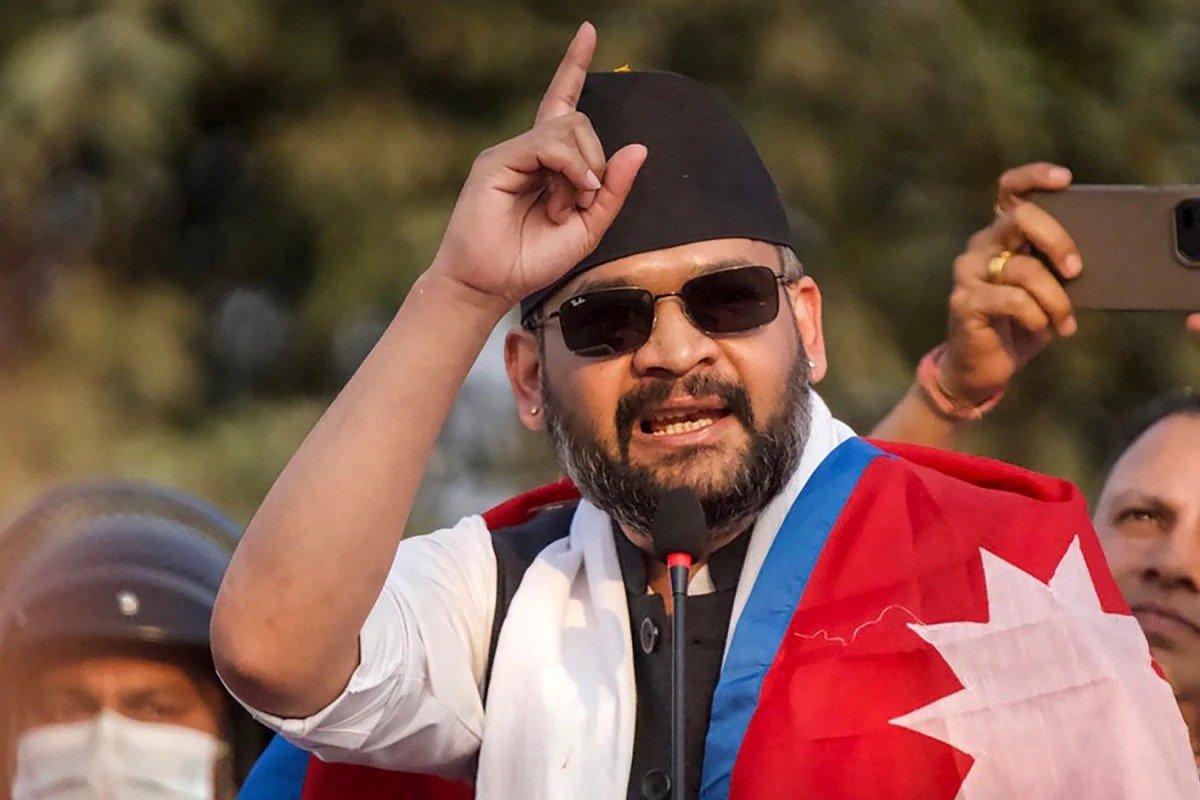
Prime Minister Balendra Shah has issued a stern critique of the long-standing influence of political parties within Nepal’s educational and administrative sectors. In a recent social media address, the Prime Minister described party-affiliated student and employee organizations as “sleeper cells,” arguing that their primary function has shifted from serving the public to advancing partisan interests.
According to the Prime Minister, decades of political interference have fundamentally eroded public trust in national institutions. He noted that for too long, merit and competence have been sidelined in favor of political access and loyalty to party “flags and bags.” PM Shah emphasized that the current administration’s move toward reform is not a targeted attack on any specific political entity, but rather a necessary intervention to “save the system” from institutional decay.
Defending the decision to move forward via ordinances, the Prime Minister clarified that the Rashtriya Swatantra Party (RSP) chose this route to break the cycle of partisan expansion. He argued that simply creating more party-affiliated bodies would achieve nothing for the quality of education or the dignity of public servants. Instead, the new measures aim to deliver on public demands: banning party flags from schools, removing political affiliations from the bureaucracy, and ensuring that appointments and promotions are governed strictly by law and capability.
The Prime Minister explicitly rejected claims that these measures curtail democratic rights. He argued that the reforms actually strengthen professional freedom by allowing students to learn politics as a set of ideas rather than a tool for mob leadership. Furthermore, he stated that civil servants should be guided by the law of the land rather than the “shadow of a party.”
In his closing appeal, PM Shah urged the public to support these institutional changes, framing the effort as a move toward a “politics of civility.” He reiterated that the government’s mandate is derived from the will of the people, asserting that the removal of partisan capture is the only way to secure a stable and professional future for ordinary Nepalis.