

In a bustling banquet hall at the Lotte Hotel in Seoul, David Park is folding napkins—not just for guests, but for the future of global industry. Armed with body cameras and sensors, Park is part of a high-stakes mission by the South Korean startup RLWRLD to digitize human dexterity. As the race for “Physical AI” heats up, South Korea is betting that its greatest asset isn’t just code, but the “instinctive know-how” of its master technicians.
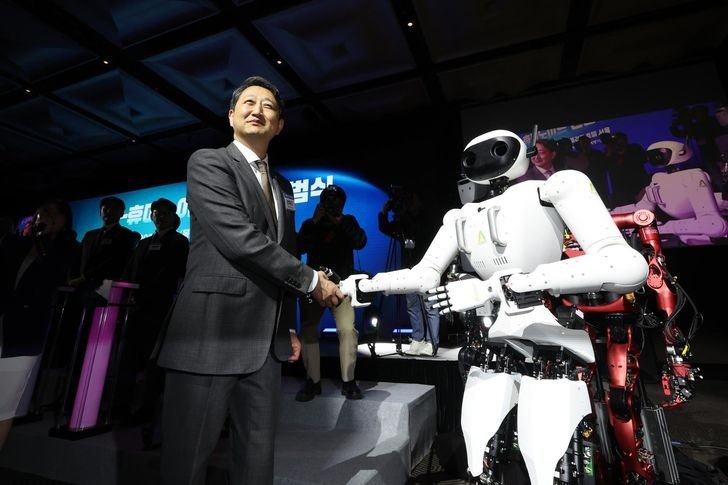
The concept of Physical AI represents a leap beyond the rigid, repetitive robots of the past. These new machines are designed to perceive, decide, and act autonomously in unpredictable environments. While U.S. giants like Tesla and various Chinese firms are pouring billions into humanoid hardware, South Korean firms are focusing on the “brain.” By capturing the fine motor skills of warehouse loaders at CJ Logistics and hospitality experts at Lotte, RLWRLD is building a “robotics foundation model.” The goal is a software layer that allows five-fingered robotic hands to replicate human touch, force, and precision—tasks that have long eluded automation.
This push is more than a technological feat; it is a national economic strategy. Facing an aging population and a shrinking workforce, the South Korean government recently committed $33 million to create a database of “master technician” skills. Industry leaders like Hyundai Motor and Samsung Electronics are already eyeing the finish line. Hyundai plans to deploy Boston Dynamics humanoids in its factories by 2028, while Samsung aims for fully “AI-driven factories” by 2030. For South Korea, the path to becoming an AI powerhouse lies in its manufacturing DNA, where the nuances of human labor can be translated into robotic efficiency.
However, the rapid transition has sparked friction at home. Labor unions have expressed deep concerns over an “employment shock,” fearing that the very mastery being digitized today will lead to the displacement of workers tomorrow. Critics argue that while AI can replicate existing skills, the “continuous development of craft” remains a uniquely human endeavor. To address this, experts suggest that the future will likely be a hybrid. In the hospitality sector, for instance, robots may eventually handle up to 40% of back-of-house tasks like cleaning and setup, leaving the more complex, high-empathy human interactions to the professionals.
As RLWRLD prepares to deploy industrial robots at scale by 2028, the world is watching to see if a machine can truly learn the “feel” of a job. If successful, the napkins David Park folds today may be the last ones handled by human hands in the hotels of tomorrow.