

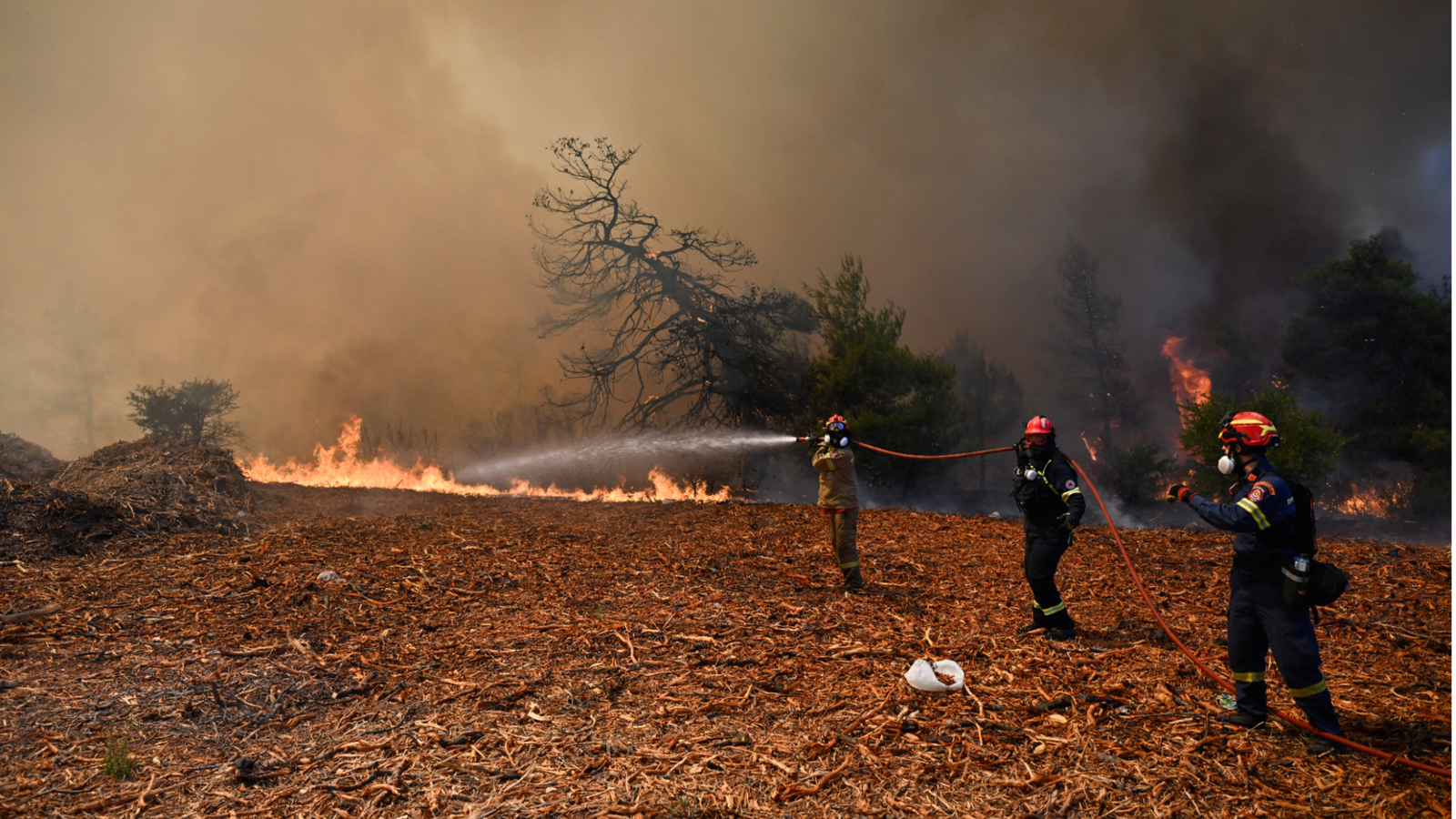
Wildfires are spreading across several locations in Serbia due to strong winds, intense heat, and a prolonged drought. Serbian emergency services are working to bring these fires under control. A fire has reignited in the ‘Deliblato Sands’ protected nature reserve in northeastern Serbia, burning approximately 300 hectares of pine forest. Serbia’s public broadcaster, RTS, reported on Wednesday (local time) that the fire at Deliblato Sands—which had been extinguished about 10 days ago—flared up again due to strong winds fanning embers that remained on the ground. According to a Xinhua news agency report, the fire in the southern Banat region, located about 60 kilometers east of Belgrade, has not yet been brought under control. Serbia’s Ministry of Interior stated that it has deployed all available personnel and equipment to extinguish the blaze. According to RTS, 45 firefighters from various towns, volunteer fire brigades, and three police helicopters are engaged in firefighting efforts; currently, no buildings are at risk. Meanwhile, emergency services are also attempting to control several other fires across the country. This wave of wildfires coincides with the peak of an intense heatwave. The Republic Hydrometeorological Service (RHMZ) has forecast maximum temperatures of 35–40 degrees Celsius for Wednesday and Thursday. Additionally, ‘tropical nights’ (nights with very high temperatures) are expected in Belgrade and the northern province of Vojvodina. Prolonged drought conditions have also caused water levels in Serbia’s rivers to drop. The RHMZ has warned that in the coming days, the Danube, Sava, and Tisa rivers will remain below the minimum water levels required for navigation. Meanwhile, weeks of extremely dry weather have caused the flow in many small rivers to drop to levels nearing the minimum required for ecological health. Europe is currently grappling with severe heatwaves and wildfires. In late July, the United Nations Economic Commission for Europe (UNECE) announced that, according to the latest available data, over 434,000 hectares of forest have burned across Europe this year. The UNECE noted that wildfires are spreading across Europe and North America, destroying forests, endangering communities, and releasing massive amounts of carbon into the atmosphere. The 2026 fire season once again demonstrates that while fully developed wildfires are difficult to contain, much can be done to prevent future disasters.