

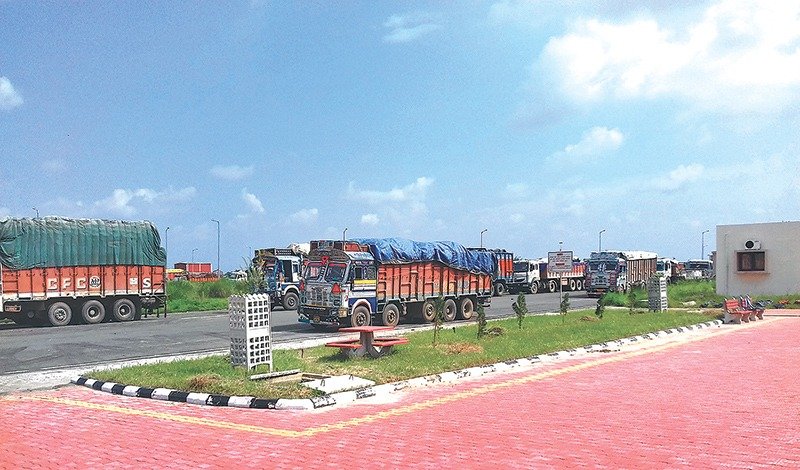
As of Tuesday, import operations at the Birgunj Customs Office have come to a halt because authorities and business owners can’t agree on whether or not to put maximum retail price (MRP) labels on imported goods. The deadlock has effectively stopped customs clearance, which has left a lot of shipments stuck at the border. Import operations at the Birgunj Customs Office have ground to a halt as of Tuesday, following a standoff between authorities and business stakeholders regarding the mandatory implementation of Maximum Retail Price (MRP) labels on imported goods. The impasse has effectively paralyzed customs clearance processes, leaving a significant backlog of shipments stranded at the border.
The problem started with a federal government order on April 8 that says all goods coming into the country must have a set MRP. The government wants to protect consumers and make prices the same for everyone, but most entrepreneurs and importers haven’t been able to give the right MRP paperwork. This has led to a direct confrontation with customs officials, who are trying to enforce the new rule by refusing to let goods through that don’t follow the labeling rule.
Uday Singh Bista, the Information Officer at the Birgunj Customs Office, said that clearance operations have been very difficult. “We tried to put the MRP policy into effect on Tuesday, as the government told us to do. “However, customs clearance work was immediately blocked because business owners and traders were trying to move goods without the necessary MRP paperwork,” Bista said.
The stop is a big threat to the government’s ability to collect money every day. On average, the Birgunj Customs Office makes between Rs 500 million and Rs 600 million a day. If the standoff goes on, the effects on the economy are likely to be bad, from problems with local supply chains to big losses in national customs revenue.
Currently, stakeholders are at a standstill because traders are refusing to make the procedural changes needed to follow the April 8 directive. Right now, it’s not clear how the government plans to close the gap between the rules and the problems that importers have with logistics. At the same time, the number of goods waiting to be cleared at the border keeps growing, which makes people worry that there could be shortages of important goods if the disagreement isn’t settled quickly.