

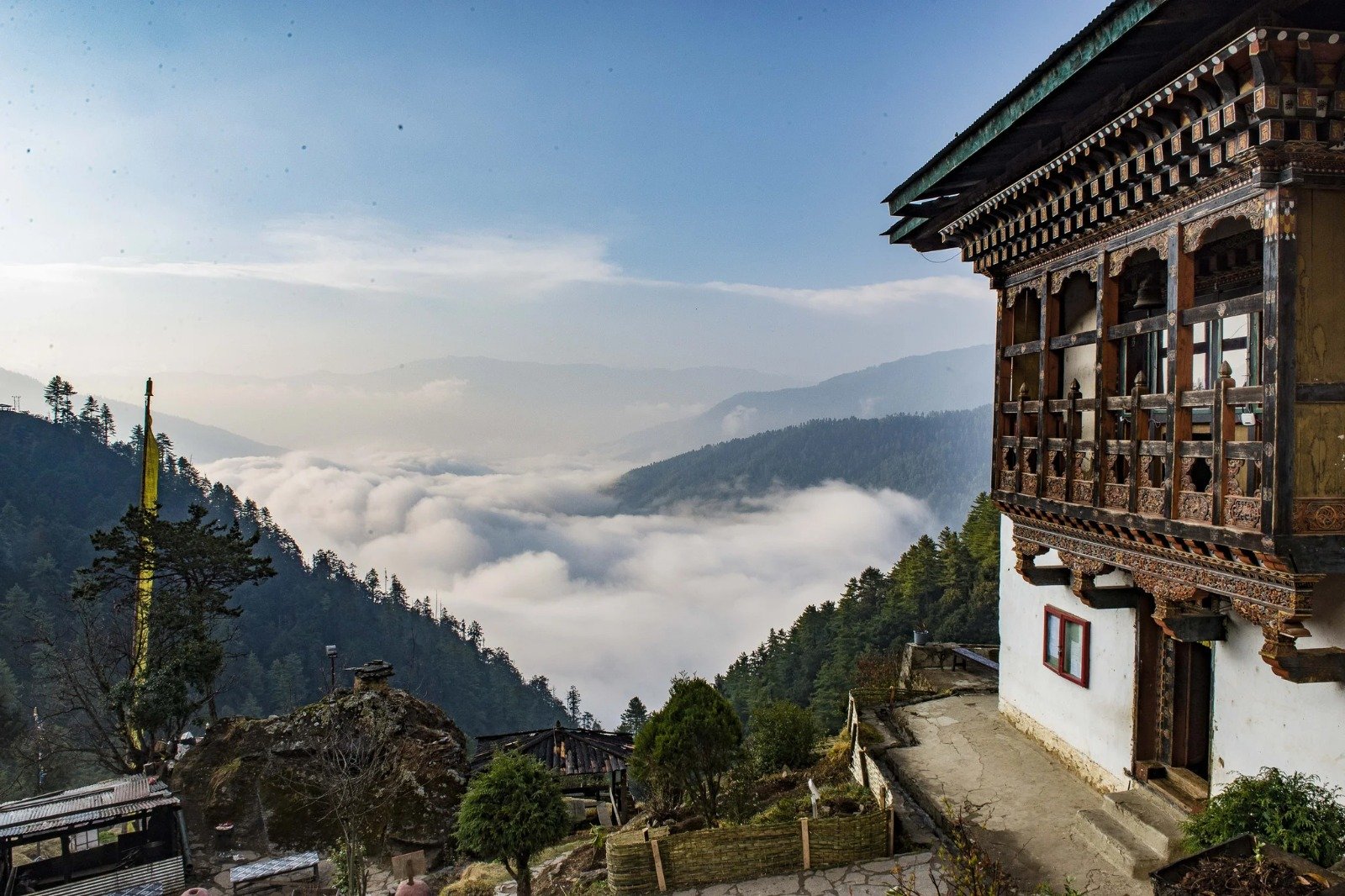
A quiet revolution is reshaping the highland community of Sakteng in Trashigang. While new road connectivity has brought long-awaited development to this once-remote Bhutanese town, it has also accelerated the erosion of its unique cultural soul. Today, ancient rituals of communal harmony are rapidly giving way to modern efficiency.
For generations, building a home in Sakteng was a grand community affair powered by woola—a system of non-monetary communal labor. Entire villages would unite to raise a house, culminating in a vibrant tug-of-war ritual to invite the blessings of the local deity, Aum Jomo. Today, that deep-rooted ceremony has vanished. Cash has replaced community; laborers are now paid wages, and new homeowners move in the very next day without the traditional three-day feast of gratitude.
Similarly, the fabric of Brokpa marriage customs has fundamentally shifted. The era of arranged, blind marriages—where a groom herding yaks might only learn of his wedding a day prior—has faded as education and modern awareness take hold. This shift has brought positive social evolution: daughters now rightfully inherit equal shares of property alongside their brothers, reversing an old order that once left women assetless.
Furthermore, the legendary, lavish weddings of the past—where wealth was measured by the exchange of yaks, cows, and pastureland—have been drastically scaled back. Because transporting livestock across the highlands is difficult, families now opt for simpler ceremonies using cash gifts, avoiding the traditional Nu 150,000 price tag of a grand wedding.
Sakteng now stands at a critical crossroads. As the older generation looks toward cultural revival platforms like the Yeti Quest Festival, the ultimate survival of this highland heritage now rests squarely on the shoulders of its youth.