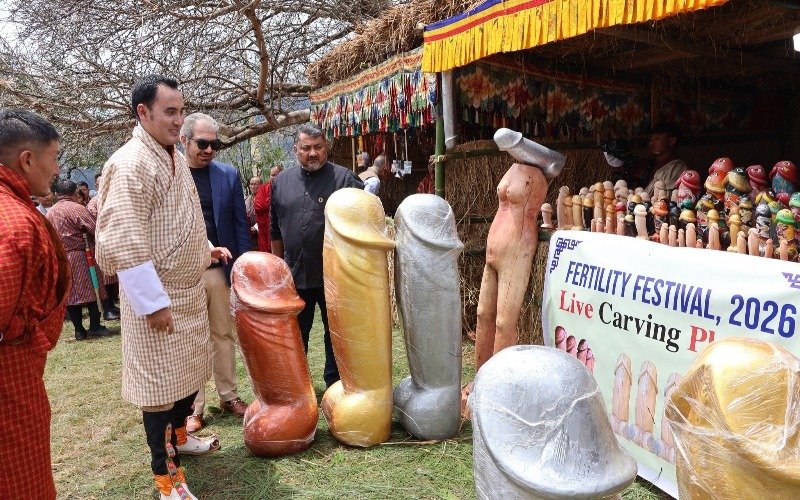
The first-ever Fertility Festival at Chimi Lhakhang was held on May 23 and 24, attracting thousands of pilgrims, tourists, and local visitors to one of Bhutan’s most culturally unique spiritual sites.
A total of 3,245 visitors attended the two-day celebration, which highlighted Bhutanese traditions connected to fertility blessings, family wellbeing, and the teachings of the renowned 15th-century Buddhist saint Drukpa Kunley, widely known as the “Divine Madman.”
The festival was organised by the Punakha Dzongkhag Administration in collaboration with the Department of Tourism and Barp Gewog Administration. Funding for the event was provided by the Government of India under the Economic Stimulus Program, with support from the Embassy of India in Thimphu.
Located near Lobesa in Punakha District, Chimi Lhakhang is among Bhutan’s most visited monasteries. Built in 1499, the temple is internationally recognised for its association with fertility blessings and the unconventional spiritual teachings of Drukpa Kunley.
The opening day of the festival featured colourful cultural performances, traditional rituals, and strong community participation. The event was attended by Namgyal Dorji, whose presence added significance to the inaugural celebration.
The festival showcased Bhutan’s living spiritual traditions through prayers, ceremonies, and cultural programmes that remain deeply connected to everyday life in rural communities.
Organisers said the event was designed not only to celebrate spiritual heritage but also to promote sustainable tourism and support local economic activity.
The festival provided local farmers, artisans, and entrepreneurs an opportunity to display and sell indigenous products, handicrafts, and traditional cuisine.
Officials said the initiative aimed to encourage rural economic participation while positioning Punakha as a destination for meaningful cultural tourism experiences.
Much of Chimi Lhakhang’s identity is closely linked to Drukpa Kunley, a Buddhist teacher remembered for using humour, songs, and unconventional behaviour to spread spiritual teachings.
Villages surrounding Punakha continue to display symbolic phallus paintings on homes and buildings — a tradition associated with his teachings. While these symbols may appear unusual to some international visitors, they are widely regarded within Bhutanese culture as representations of fertility, protection, and good fortune.
One of the main attractions on the final day was the Fertility Trail Run, which began at Toep-Chandhana and ended at Chimi Lhakhang after covering more than 10 kilometres across the Punakha valley landscape.
According to organisers, 53 participants registered for the event, which featured separate categories for men and women. Winners received prizes from the Lam of Chimi Lhakhang in recognition of their participation and achievement.
The festival concluded with a traditional Tashi Loebay ceremony, offering prayers and blessings for peace, prosperity, and happiness.
The Fertility Festival also reflects Bhutan’s broader efforts to promote authentic cultural tourism beyond conventional sightseeing.
Punakha remains one of Bhutan’s most visited regions because of its scenic valleys, historic importance, and spiritual landmarks such as Punakha Dzong and the Punakha Suspension Bridge.
For international visitors, festivals like this offer a deeper understanding of how Bhutan continues to balance spirituality, tradition, and tourism while preserving cultural authenticity.
Organisers said the festival aimed to introduce Punakha’s unique cultural identity to both domestic and international audiences while encouraging respectful engagement with Bhutanese traditions.