

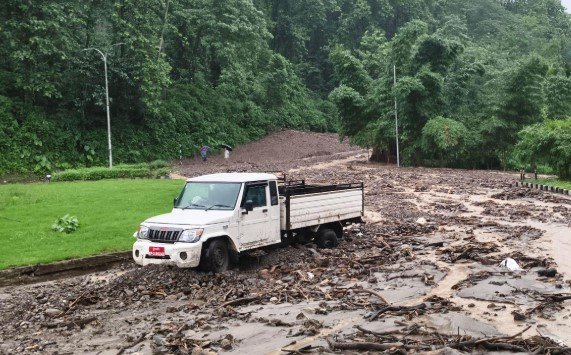
Repeated landslides, tension cracks, and heavy debris flows along Bhutan’s newly constructed 1.6-kilometer Rinchending bypass are expected to add millions of ngultrum in unexpected expenditures as government authorities race to implement urgent slope stabilization and infrastructure repairs. Originally designed as a Nu 134.4 million alternative corridor to safeguard connectivity between Phuentsholing and Thimphu, the project—which was scheduled for completion on July 26—has faced significant construction delays due to fragile geological terrain and ongoing monsoon disruptions. The unstable slope conditions have not only damaged newly laid blacktop and drainage systems along the bypass, but runoff and overflow have also disrupted downstream infrastructure, encroached on local housing developments, and damaged nearby access roads. In response, the Department of Surface Transport has identified four major failure points requiring permanent engineering solutions, proposing toe walls, check walls, and crib frame structures to mitigate surface runoff and stabilize the corridor. Meanwhile, the escalating challenges have drawn criticism regarding whether adequate pre-construction geotechnical and environmental assessments were conducted prior to breaking ground.