

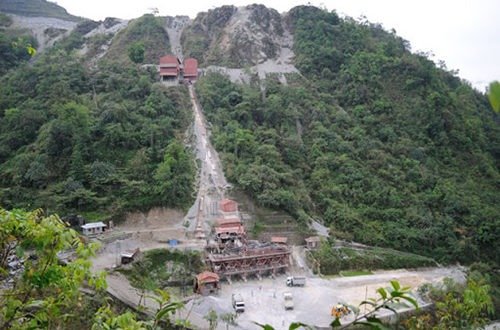
With its Constitution mandating at least 60 per cent forest cover and forests absorbing far more carbon than Bhutan emits, conservation is central to its national identity and Gross National Happiness philosophy. The discovery of potential deposits of copper, tungsten and other minerals therefore presents a difficult policy choice.
Bhutan’s Department of Geology and Mines says mining can proceed only with environmental, forestry and cultural clearances, while protected areas remain off-limits. Environmental Restoration Bonds and ongoing restoration requirements are intended to ensure that mining companies remain accountable throughout the life of a project.
But the country’s real test would come if metallic mining begins. Bhutan currently has experience mainly with industrial minerals and lacks the infrastructure and expertise for large-scale metal extraction. The government says any future development would depend on national need, public consensus and compliance with constitutional and GNH principles.
If mining is approved, officials envision “mindful mining”: precision underground extraction rather than expansive open pits, dry processing and dry-stack tailings to reduce water use, remote sensing to minimise disturbance, and cleaner energy and equipment.
The central question, therefore, is not whether Bhutan can mine. It is whether it can mine surgically, transparently and responsibly enough to ensure that economic development does not leave permanent scars on a country whose greatest natural asset is its environment.