

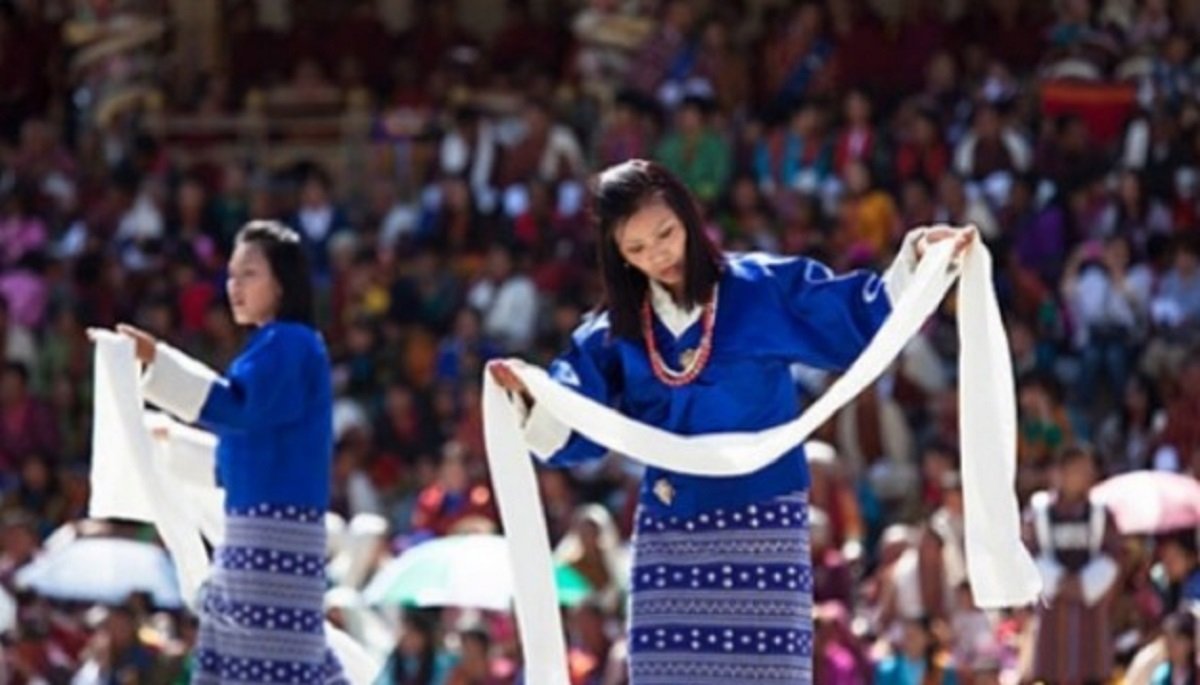
The khata, a traditional fabric scarf, holds an important place in Bhutanese religious and social life. Usually made of silk and commonly white, it is presented at weddings, funerals, festivals, graduations, receptions and other occasions as a symbol of respect, goodwill, blessing and sympathy.
The tradition is believed to have originated in Tibet and later spread to neighbouring countries, including Bhutan. In Bhutan, khatas are offered to Buddha statues, religious teachers, elders and guests, and are also used to welcome visitors or bid farewell to travellers.White represents purity and compassion, while five-colour khatas—blue, white, yellow, green and red—carry religious symbolism and are considered sacred. Khatas may also feature the eight auspicious Buddhist symbols.
When presented to Buddha, teachers or elders, the scarf is traditionally offered with both hands and a bow as a gesture of deep respect. For friends or equals, it may be placed around the recipient’s neck or handed directly to them. Receiving a khata in Bhutan is therefore regarded as a meaningful gesture of kindness, respect and good wishes.