

For most people, turning on a tap and getting water is routine. But in Tili village at Shaba in Paro, getting enough water for the day has become a daily struggle. Just a kilometre from the Paro-Thimphu highway, residents depend on small ponds and water pumps as they cope with a shortage that is affecting both their homes and farms.
70-year-old Passang is one of the oldest members of the community in Tili. She walks through the garden she has grown on what was once a paddy field. She remembers a time when rice fields surrounded her home. Back then, water was never something she had to worry about.
Passang said, “We cultivated paddy wherever we could. But it has been several years since we started facing water shortages. The wetland has turned dry, and because of the lack of water, we cannot cultivate crops properly even on those dry lands.”Tili has about 48 acres of wetland, but only about 38 acres are currently cultivated because of water constraints. The shortage affects all 48 farming households in Upper and Lower Tili.
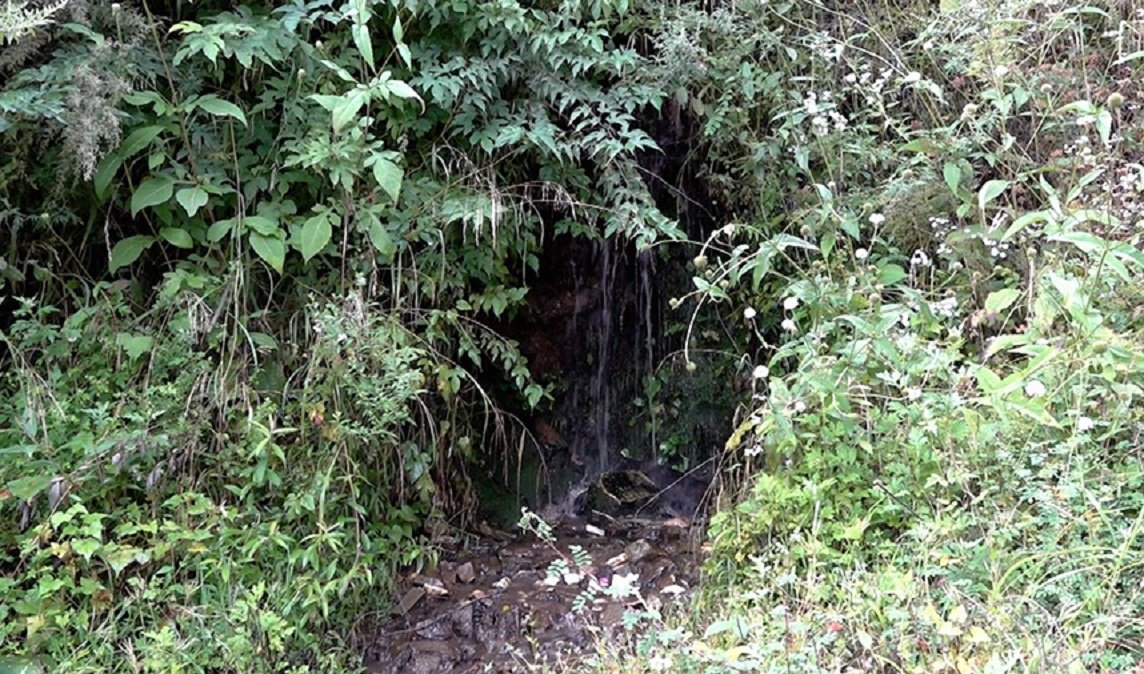
The village partly depends on a spring in Pangbisa, upstream of Tili, for drinking and irrigation. But the spring feeds a seasonal stream, and the water is not enough to meet demand, especially during paddy transplantation in May and June. In the dry season, the stream does not reach some lower fields.
For Passang, the shortage is reflected in how much rice families can grow.
She said, “It is not that people here do not work. We work hard. But because we do not have enough water, whatever we plant does not give us the yield we used to get. A household could cultivate one or two acres of paddy before. Now, it is difficult to cultivate even 50 or 60 decimals.”
For some households, the problem is even as basic as not having enough water to drink.These are water collection areas dug by some of the residents here. These fill during the rainy season and become their main source of water for drinking and cooking. But when the weather turns dry, the water can run out, leaving families with little or no water for their daily needs.
“When it is sunny and dry, we do not have enough water to drink. And when it rains, and there is water, it is murky. There could be bacteria in it that we cannot see. So, we boil the water before drinking it,” said Choden, a resident.
The situation is different in lower Tili, where water from the upstream spring does not reliably reach. Households have installed their own pumps and dug wells to draw water that seeps from the nearby Paro Chhu.