

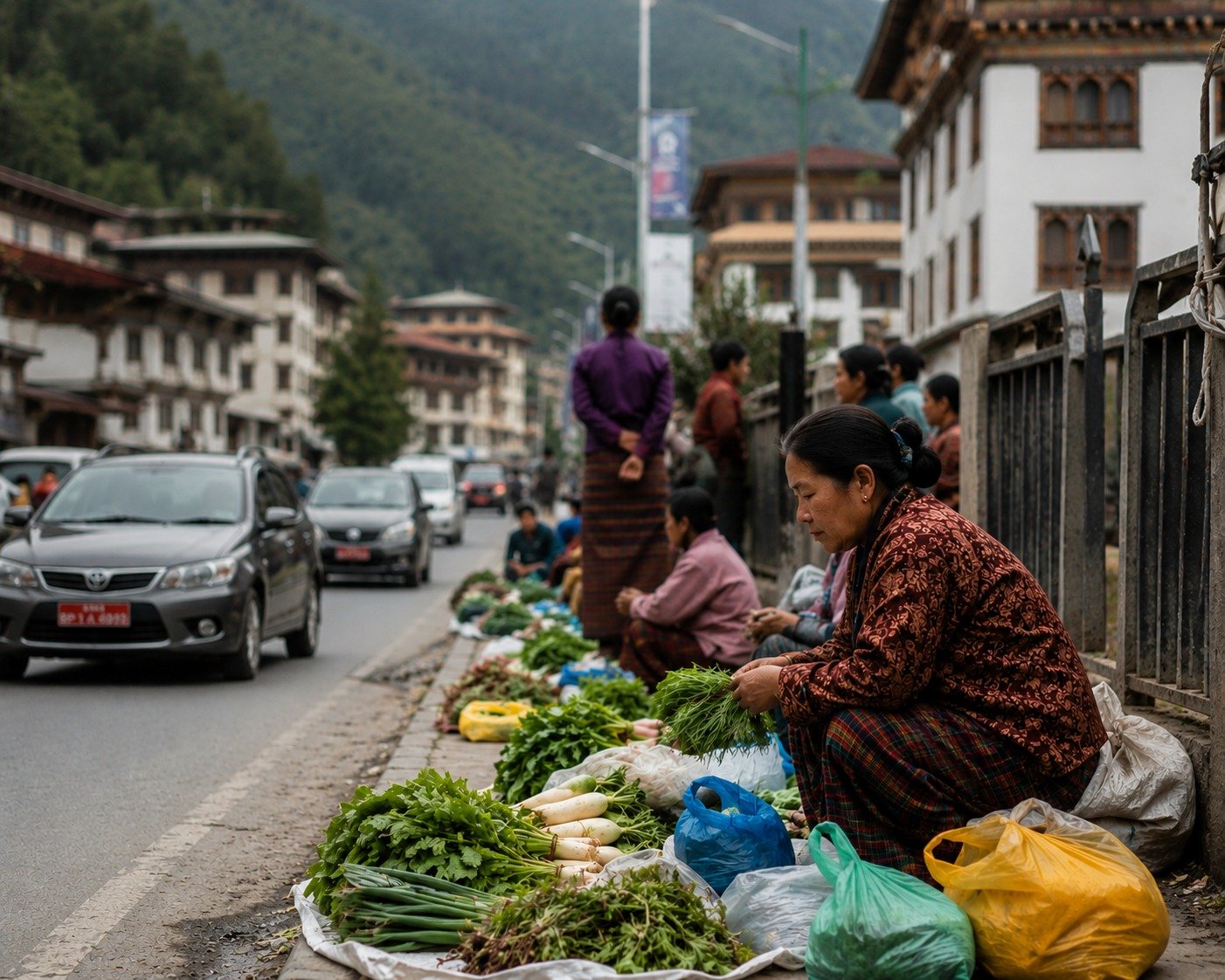
Along the busy thoroughfares of Bhutan’s capital, roadside merchandisers begin setting up their small booths before daylight, hoping to secure guests before the megacity’s rush hours begin. From fruits and vegetables to tea, snacks, and ménage particulars, these informal businesses have become a familiar part of Thimphu’s civic geography. For numerous merchandisers, roadside selling isn’t simply a source of income but a diurnal struggle for survival. “I start veritably beforehand in the morning, around daylight,” said Kinley Wangmo, who sells fruits near a busy junction in Thimphu. However, I lose guests if I come late. Some days are good, but some days I only earn enough for food and transport. There’s nothing fixed then.” She said the query of earnings is one of the hardest corridors of work. “What I vend is what I earn. However, I do not have income for that day,” she added, if I do not vend.
Across the megacity, merchandisers enthrall roadside corners, paths, hack stands, and open spaces, grounding their locales on client movement, rainfall conditions, and original enforcement rules. Many entered the trade after floundering to find stable employment. Dhan Maya Rai from Samtse, who sells vegetables during the gloamings, said roadside dealing came as her only dependable option after several temporary jobs failed to give long-term security. “I worked in different places before, but nothing was endless,” she said. “It’s tiring, but at least I can manage my diurnal charges.”
According to merchandisers, earnings change significantly depending on rainfall and client turnout.
Still, I earn a decent commodity, “If there are customers. However, I occasionally go home with veritably little, if not nothing. But rent, food, and transport still need to be paid,” Rai said.
Dorji Lhamo, who runs a small tea and snack cube near a hack stage, said morning hours are pivotal for her business.
“My main guests are motorists and office goers in a hurry,” she said. However, the whole day becomes slow, “If I miss the morning rush.” She also noted growing competition as further people turn to informal dealing due to rising living costs and limited employment opportunities. “Before, there were smaller booths. Now numerous people are doing the same thing, so we all depend on analogous guests,” she said. Despite competition, merchandisers frequently support one another informally by sharing information about available spaces or advising each other when authorities ask them to dislocate.
Public opinion on roadside dealing remains mixed but largely sympathetic. Numerous residents appreciate the convenience and affordability of the services rendered. “It’s veritably useful,” said a pupil from Royal Thimphu College. “Occasionally you can just buy fruits or snacks on the way without going to a shop. It’s cheaper and quicker.”
Others, still, point to enterprises similar to business traffic and waste accumulation in crowded areas.
“In certain places, it becomes crowded,” said hack motorist Norbu Wangdi. “You have to be careful while driving, especially near junctions. occasionally there’s also litter left before.” Still, he conceded the difficulties merchandisers face. “They’re just trying to survive,” he said. One of the major challenges for merchandisers is the lack of endless dealing spaces. Many are constantly asked to dislocate, adding to the insecurity of their work. We do always know where we can stay,” said Kinley Wangmo. “Occasionally we’re asked to move, so we have to shift snappily and start again nearly differently. It’s stressful.” Weather conditions further affect earnings, particularly during stormy days when client footfall drops sharply. Still, guests don’t come if it rains. Fruits get damaged, and we earn nearly nothing that day,” she said.
Merchandisers also struggle with balancing force and charges.
“I have to suppose precisely before buying stock,” said Dil Man Gurung from Dagana. However, I lose plutocrats, “If I buy too important and don’t sell. However, I also lose guests if I buy too little.”
He added that saving the plutocrat remains nearly insolvable. “Most days, I just manage to survive for that day. There’s nothing redundant left wing.”
Despite the rigors, roadside dealing continues to play an important part in Thimphu’s informal frugality by furnishing livelihoods and numerous affordable goods to residents.
Still, it would be safer and more stable for us,” said Dorji Lhamo, “if there were proper spaces for dealing. “We could work without fear of being moved all the time.”
As evening falls, merchandisers begin packing unsold goods and preparing for another day of uncertain earnings, early mornings, and long hours—a cycle that continues daily across the thoroughfares of Thimphu.