

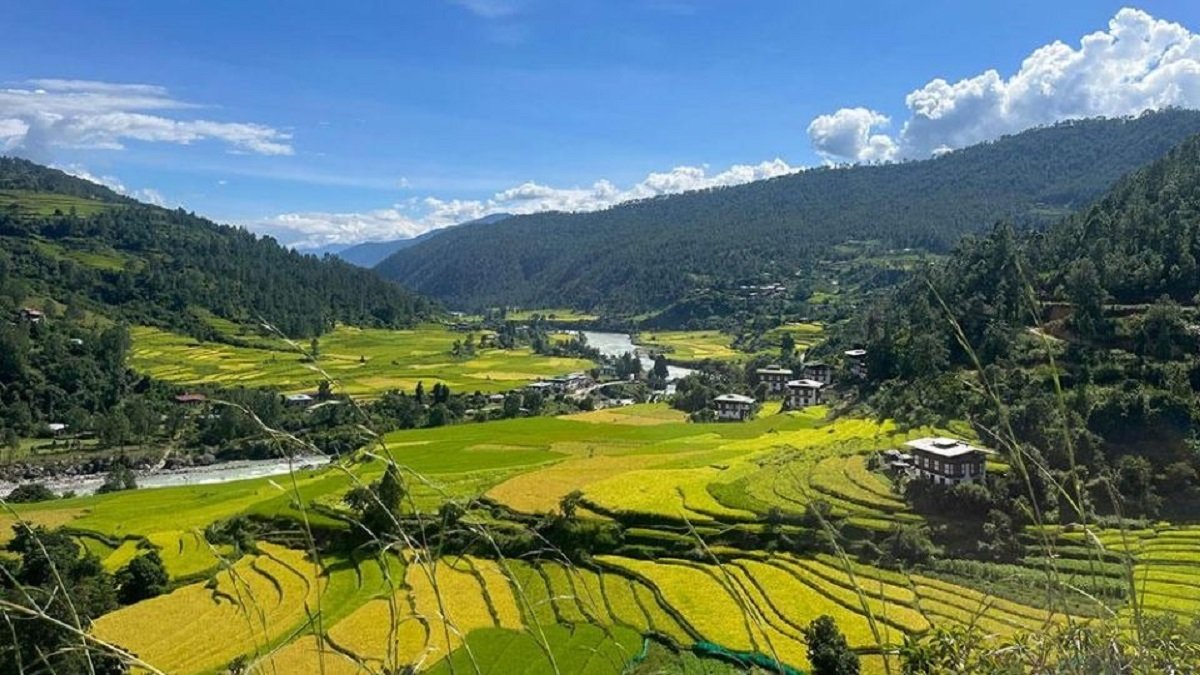
Punakha, often referred to as the country’s rice bowl, is experiencing significant warming that threatens its agricultural yield. As irrigation sources dry up, farmers such as Aum Gyem, a Changyel resident, express concern over altered water availability and climate conditions. Research conducted by Karma Tempa, an Assistant Professor at the College of Science and Technology, indicates a notable increase in land surface temperatures in Punakha over the last thirty years. Specifically, pre-monsoon temperatures have risen approximately 2.8°C per decade, and average maximum temperatures have increased even more drastically, by about 3.55°C per decade.
This region’s geographical characteristics, being one of Bhutan’s lower altitude valleys, compounded by climate data analysis from 1996 to 2025, reveal hotter summers and increased monsoon rains. The data supports community perceptions of climate impact, with a staggering 93% of survey respondents citing declining water resources and over half reporting reduced farm productivity. Although significant health issues were not yet reported, 98.2% acknowledged that rising heat is a serious future threat.
Moreover, testimonies from local farmers emphasize tangible changes, with unpredictable rains and dried up water sources leading to decisions to leave land uncultivated. Integrated Agriculture and Livestock Survey data points to a slight decline in rice production, indicating that even with increased cultivated areas, yields are falling per acre due to water scarcity.
Heightened climate stress intersects with additional risks, such as pest infestations attributed to changing temperatures, further complicating already strained agricultural conditions. The diversity of rice varieties cultivated in Punakha faces increasing pressures, as prices rise but do not adequately compensate for declining yields.
Karma Tempa’s study underscores the vulnerability of Himalayan valleys, warning of consequences like accelerated glacial retreat and disrupted hydrological cycles, exacerbating issues surrounding water availability for irrigation. To combat these challenges, the study advocates for localized climate-risk assessments and the implementation of climate-smart agriculture practices while aligning with Bhutan’s National Adaptation Plan and the UN’s Sustainable Development Goal 13.
Long-term adaptive strategies, reinforced with financial backing, are essential, as indicated by Tempa. For farmers, immediate survival overshadows broader policy discussions, with some opting to leave land uncultivated due to water shortages. This gradual alteration in agricultural practices represents a slower, yet equally profound aspect of climate change, necessitating timely and coordinated action to preserve the productivity of Bhutan’s fertile lands.