

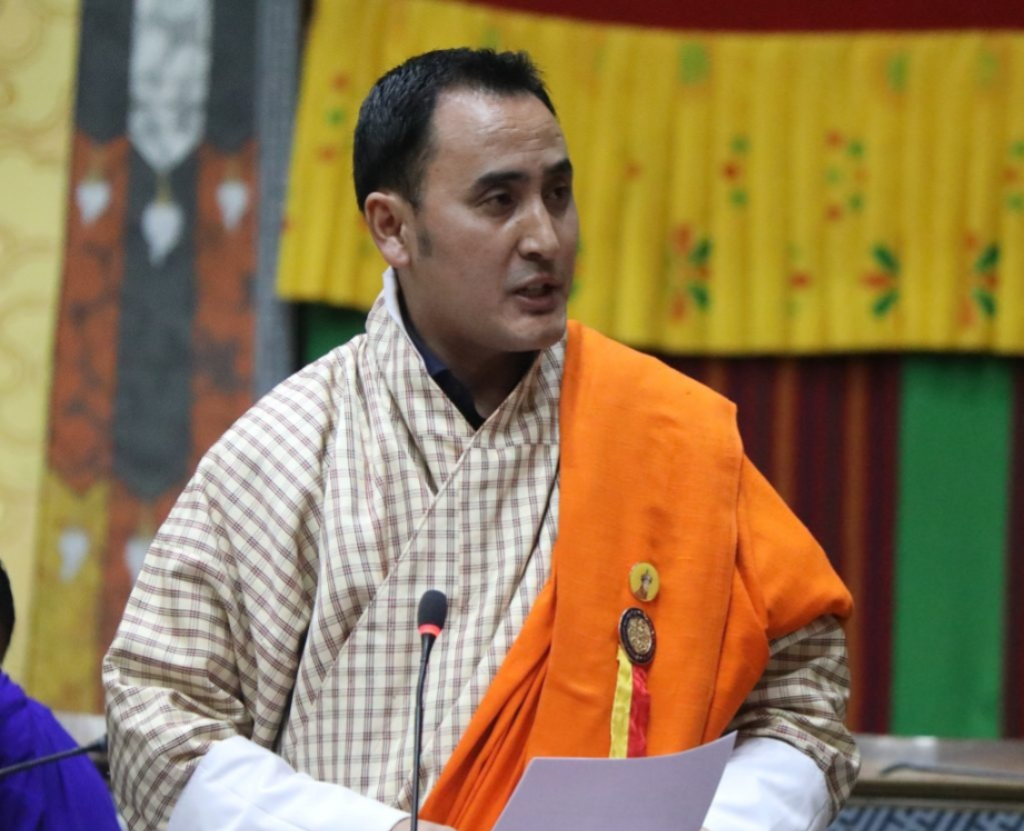
Concerns over fuel pricing transparency and the pricing mechanism used for petroleum imports from Indian Oil Marketing Companies were raised during the ongoing session of the National Assembly of Bhutan on May 14. During question hour, Member of Parliament Loday Tsheten highlighted recurring public concerns regarding the lack of transparency in how retail fuel prices are calculated in Bhutan despite the country benefiting from exemptions on certain Indian taxes and export duties. The MP asked the government to disclose the complete pricing structure for imported petrol and diesel, including refinery transfer costs, freight charges, dealer commissions, taxes, exchange rate factors, transportation costs, and other related fees. He also questioned whether the government had conducted any independent audit or review of the pricing methods used by Indian Oil Marketing Companies (OMCs), especially after fuel prices in Bhutan reportedly saw reductions from 2023 onward following negotiations with Indian companies. According to Tsheten, those reductions raised questions about the earlier pricing system and the margins previously applied.
Responding to the concerns, Namgyal Dorji acknowledged that the issue had received public and media attention and said the government has been closely monitoring fuel pricing trends, particularly during periods of sharp price increases. He stated that Bhutan has repeatedly sought clarification from Indian oil companies regarding invoice structures and pricing components, while discussions were also held with the Government of India on export duties and fuel pricing arrangements. However, the minister noted that detailed commercial pricing structures and internal profit margins of Indian OMCs are considered commercially sensitive and may not be fully disclosed publicly. He nevertheless expressed appreciation for India’s continued support in ensuring uninterrupted fuel and LPG supplies to Bhutan, including exemptions on export duties that help reduce Bhutan’s fuel import costs and strengthen the country’s energy security.
The minister explained that Bhutan imports all its fuel through Indian Oil Public Sector Undertakings and revises retail fuel prices every two weeks based on invoices received from the companies. He said Bhutan follows the internationally recognised Import Parity Price (IPP) system, under which prices are based on the landed cost of refined petroleum products entering the country. According to the government, Bhutan’s fuel pricing structure currently includes invoice value, 5 percent excise tax, 5 percent GST, an import fee of Nu 0.25 per litre, transportation charges, depot surcharge, transit losses, and dealer margins. Dealer margins presently stand at Nu 2.5 per litre for petrol and Nu 1.6 per litre for diesel, unchanged since 2023. Namgyal Dorji added that recent price fluctuations were largely driven by global market volatility, supply chain disruptions, and international conflicts rather than changes in Bhutan’s domestic pricing framework.
The minister also highlighted the recently introduced National Fuel Price Smoothing Framework, aimed at protecting consumers and the domestic economy from sudden global fuel price shocks. He further noted that Bhutan and India upgraded their fuel supply arrangements to a government-to-government framework through a Memorandum of Understanding signed on March 21, 2024, which will remain valid until March 2027 and is expected to improve coordination, supply predictability, and energy security cooperation between the two countries. Earlier reports had also indicated that Bhutan’s fuel pricing benchmark is linked to refined petroleum benchmarks such as high sulphur Arab Gulf Gasoil for diesel and Singapore gasoline prices for petrol, rather than crude oil prices alone. The government has reportedly spent more than Nu 1 billion under the Economic Stimulus Programme on fuel-related support, with an additional Nu 1.5 billion allocated for future assistance. Despite ongoing engagement, Indian OMCs have reportedly not provided Bhutan with a detailed fuel pricing breakdown over the past four years.