

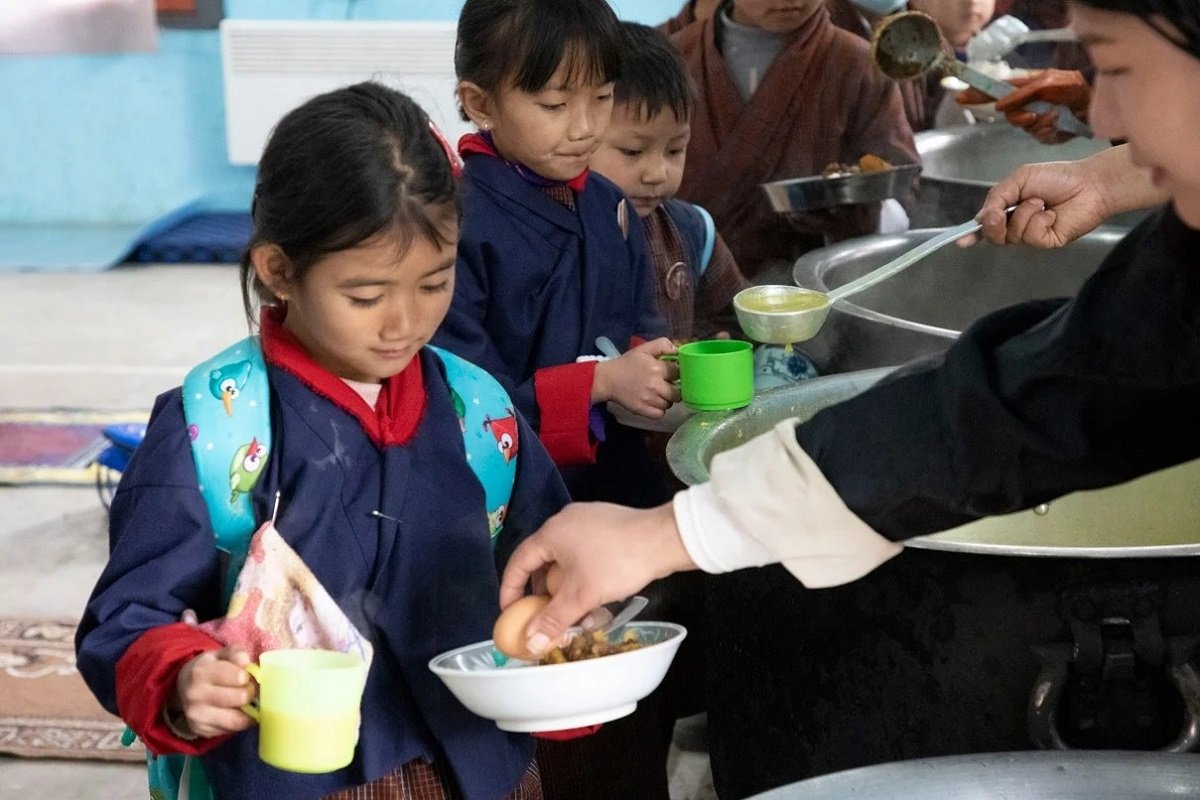
Linking smallholder poultry farmers with school feeding programs to combat child malnutrition and create stable markets for rural producers is an initiative by the Royal Government of Bhutan, supported by the FAO. This initiative, named the One-Child, One-Egg (OCOE), is a two-year pilot program supplying eggs to 32,000 students in 343 schools nationwide. In Bhutan, malnutrition levels are significant, with one in five children under five stunted and many adolescents suffering from anaemia. Eggs, being nutrient-dense, are introduced into school meals to enhance children’s health and energy levels, which has reportedly improved classroom attentiveness.
The initiative has helped farmers like Tenzin Drukpa, who, after devastating losses due to COVID-19 and a feed toxin outbreak, found stability and a reliable market through OCOE. Tenzin’s poultry operation now houses 4,000 birds, providing a consistent supply to schools. Similar benefits are experienced by other farmers like Ganesh Bdr Ghalley and the Gurung family, who rely on assured markets to maintain their livelihood while ensuring local children receive necessary nutrition.
Substantially, the initiative has transformed school lunch programs. Prior to OCOE, eggs were rarely included in meals; now, they have become a staple. The program includes training for over 280 cooks across 20 districts, enhancing meal variety and food safety. Innovative dishes featuring eggs, like scrambled dishes with local spinach and spiced whole boiled eggs, have revitalized school menus. Furthermore, the government has increased the school meals stipend to support this expanded food offering.
Looking ahead, Tenzin anticipates that improved access to resources could further enhance poultry production and contribute to the health and growth of future generations in Bhutan, embodying the dual goals of improving child nutrition and supporting local farmers.