

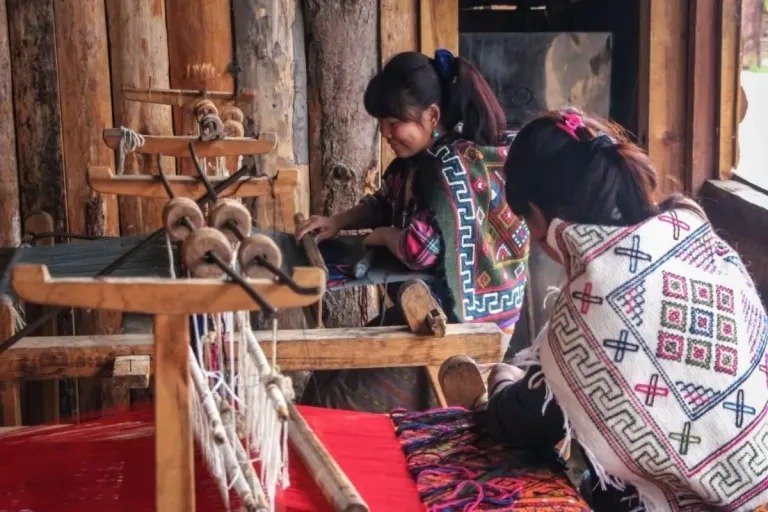
The revival of traditional natural wool dyeing is offering new hope for preserving Bhutan’s renowned Yathra weaving heritage in Chhumey Valley, Bumthang. As the decline in sheep rearing threatens the supply of locally sourced wool, artisans and authorities are working together to safeguard a craft that has been passed down through generations.
Yathra, known for its vibrant colours, bold geometric patterns, and durability, remains one of Bhutan’s most distinctive handwoven textiles. Traditionally, the wool was hand-spun and dyed using natural ingredients such as plants, roots, and bark collected from the local environment. However, the increasing use of commercial yarns and synthetic dyes has gradually reduced the practice of natural dyeing.
To help revive these traditional skills, around 30 women weavers from Chhumey Gewog recently participated in a natural wool dyeing training programme organised by the Department of Media, Creative Industry and Intellectual Property (DoMCIIP). Participants learned techniques for extracting colours from locally available plants, including mugwort, and explored ways to apply these methods to a wider range of yarns.
The initiative is also linked to efforts to secure Geographical Indication (GI) certification for naturally dyed Chhumey Yathra. Such recognition would help protect the authenticity of the textile, strengthen its market value, and create new economic opportunities for local communities. By preserving traditional knowledge today, Chhumey’s weavers are ensuring that Bhutan’s treasured Yathra heritage can continue to thrive for future generations.