

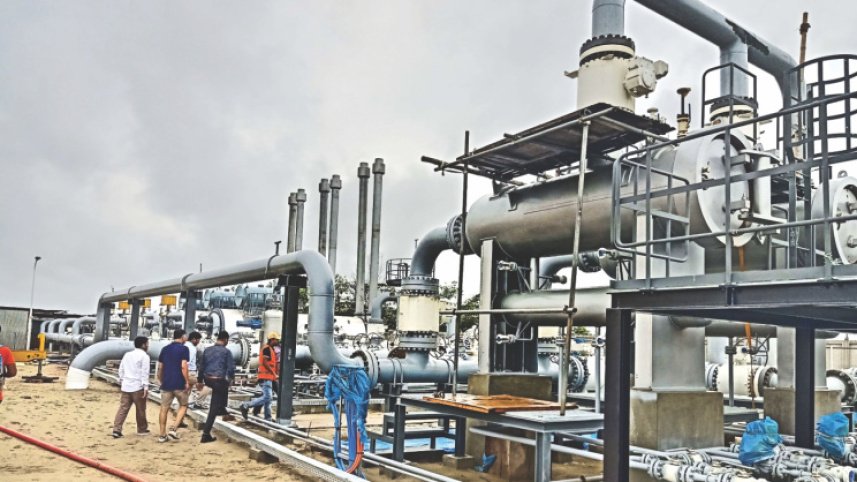
According to Bangladeshi media reports, the gas crisis that began on July 21 is spreading across the country’s industrial zones. Factories are curtailing production, shutting down units, and sending employees on leave. The situation worsened when Excelerate Energy’s LNG terminal shut down on Wednesday due to depleted inventory, further reducing gas availability in a system already under strain. A report by the Dhaka-based newspaper The Daily Star indicates that the majority of gas supplied to the national grid is being consumed by power plants, leaving very little for industries that rely directly on gas for boilers, production processes, and captive power. This crisis has impacted sectors such as textiles, garments, steel, glass, and food processing, forcing factories that use gas-fired boilers and captive power plants to adopt expensive alternatives. After a brief recovery last week, industrial zones are once again facing severe gas shortages. According to reports, more than 100 textile factories in Narsingdi—where gas pressure has dropped to near-zero levels—have halted production over the past two days. Factory owners stated that gas pressure, which was already gradually declining before the latest crisis, fell from the standard 15 pounds per square inch (PSI) to 2–4 PSI last week and has since dropped to nearly zero. Nizam Uddin Bhuiyan, President of the Narsingdi Textile, Dyeing, and Printing Association, noted that Narsingdi supplies approximately 70 percent of the country’s fabric. The crisis is also rapidly affecting garment factories in Gazipur, Narayanganj, and Savar. Factory officials report that many facilities are staggering employee shifts, resulting in a production loss of approximately 20–25 percent. Generators that typically ran on gas are now being operated using fuel oil, causing costs to rise nearly fivefold. Meanwhile, in the Bhaluka industrial area of Mymensingh, workers at 20 factories were sent on partial leave yesterday. Md. Ansar Uddin, Superintendent of Industrial Police-5, stated that out of 293 factories in the area, 99 operate on gas, and almost all of them are currently facing a gas crisis. The Titas Gas regional office in Bhaluka reported that the pressure in the area’s two gas lines has dropped from 140 PSI and 50 PSI to between 30 and 50 PSI.