

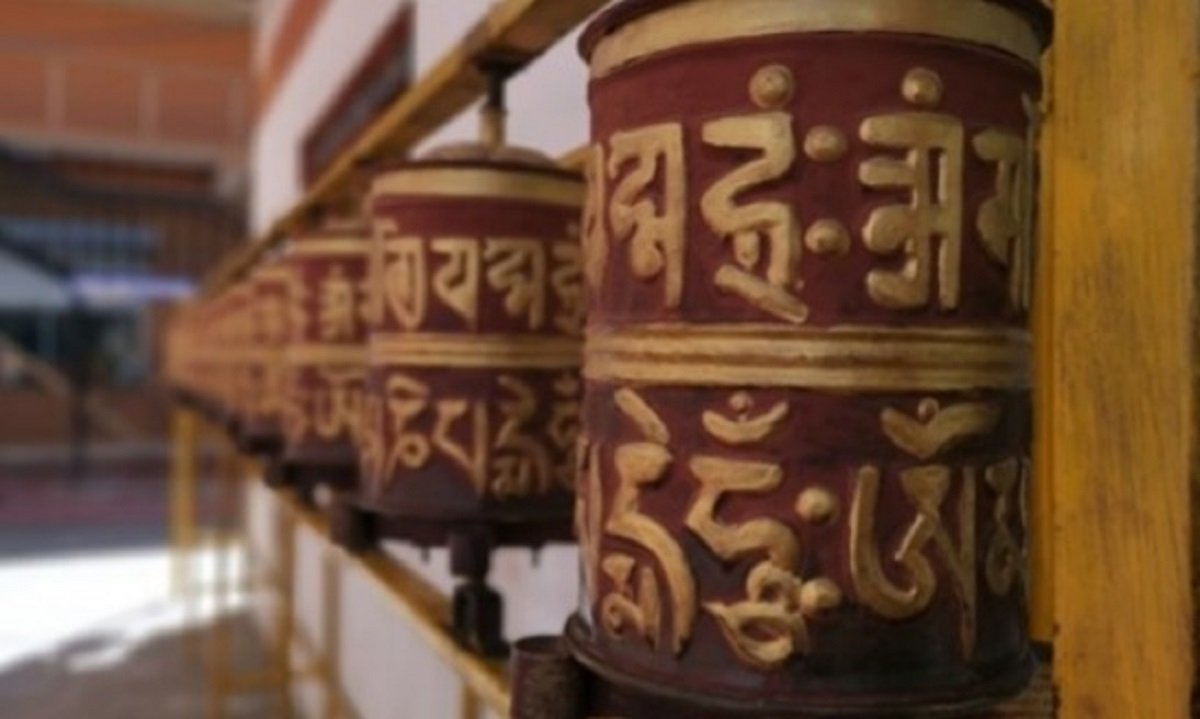
Prayer wheels remain a familiar sight across Bhutan, where people of all ages spin them as part of Buddhist religious practice. The tradition is believed to have originated in Tibet and is associated with the Buddhist concept of turning the wheel of dharma.
A traditional prayer wheel consists of a hollow cylinder containing rolled mantras. Devotees believe that spinning the wheel has the spiritual significance of reciting the mantras and helps generate merit, peace and compassion. Prayer wheels come in several forms, including handheld Mani wheels, fixed monastery wheels, and wheels powered by fire, water, wind or electricity. They can be found at monasteries, dzongs and religious sites throughout Bhutan.
Devotees generally spin the wheels clockwise, often while meditating, reciting mantras or circumambulating a stupa. Buddhist tradition holds that the practice helps purify negative karma, accumulate merit and support the pursuit of spiritual growth and enlightenment.The prayer wheel therefore remains not only a religious object but also an enduring symbol of Bhutan’s Buddhist culture and spiritual heritage.