

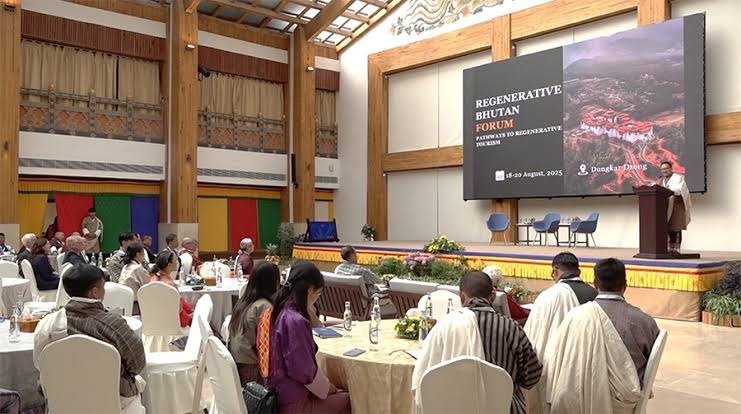
Government officials and international experts recently converged in Thimphu for a vital two-day Regional Dialogue on Future-Ready Governance, exploring innovative strategies for Asian and Pacific administrations to proactively anticipate and navigate unprecedented global shifts spanning technology, environmental climate change, shifting demographics, and complex economic transformations. Opening the discussions, United Nations Development Programme Acting Resident Representative Caitlin Wiesen underscored that the staggering pace and overlapping nature of modern crises—evidenced profoundly by cross-border health emergencies like the COVID-19 pandemic—demonstrate that many contemporary public administrations remain ill-equipped for sudden disruptions, necessitating a fundamental paradigm shift toward anticipatory governance and institutional agility. Experts from nations including Singapore, Samoa, Thailand, and host Bhutan emphasized that modern governance must evolve beyond reactive firefighting by embracing foresight, environmental scanning, and rigorous systemic analysis to forecast emerging risks before they materialize. A central highlight of the dialogue focused on Bhutan’s pioneering, people-centered Gross National Happiness framework, with Centre for Bhutan and GNH Studies President Dasho Karma Ura noting that GNH offers a robust, holistic conceptual model capable of confronting contemporary pressures such as ecological collapse, cultural erosion, and the gradual dissolution of community bonds. Expanding on these themes, Chandler Governance Group CEO Wu Wei Neng stressed that resilient public institutions must systematically cultivate the capacity to adapt national plans, budgets, and public service delivery mechanisms with speed, responsiveness, and inclusive stakeholder engagement. As participating delegates exchanged best practices on institutional resilience, the regional dialogue reinforced the critical necessity for governments to modernize policy planning, pilot flexible administrative frameworks, and institutionalize long-term strategic foresight to safeguard sustainable development across the dynamic Asia-Pacific region. To help illustrate these concepts further, the videos above offer insightful discussions regarding anticipatory governance and institutional readiness in Bhutan.