

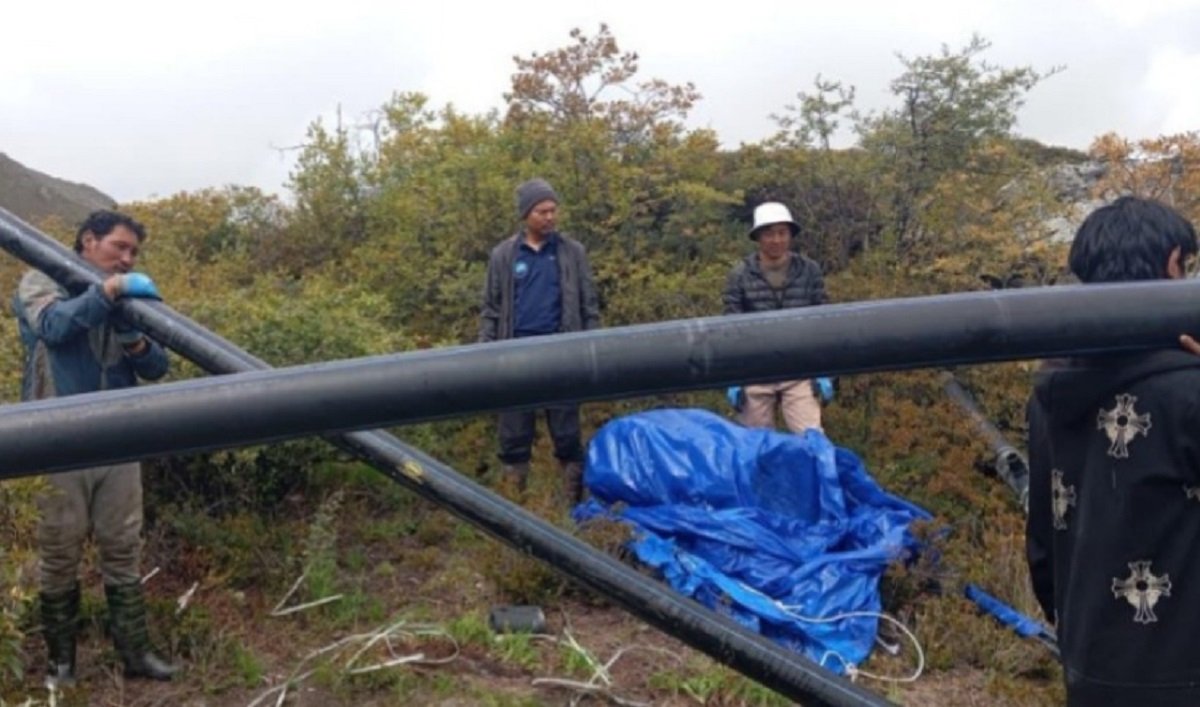
Bhutan is testing a revised siphon system to lower the water level of Thorthormi Lake, a potentially dangerous glacial lake located more than 4,400 metres above sea level in the remote Lunana region of Gasa district.
A team led by glaciologist Karma Toeb is using pipes and gravity to drain water in a controlled manner, as part of Bhutan’s broader efforts to reduce the risk of glacial lake outburst floods (GLOFs). Thorthormi is considered a high-risk lake because of its expanding volume, unstable natural barriers and location above communities, farmland, historic sites and major hydropower infrastructure. Water from the lake would flow into the Pho Chhu river and eventually towards Punakha and the Punatsangchhu basin.
Bhutan has been monitoring the lake for more than two decades. The country’s 2026 glacial lake inventory recorded 620 lakes, up from 567 in 2021, with the combined lake area increasing from about 55 to more than 58 square kilometres. The Pho Chhu sub-basin recorded the largest increase, from 157 to 187 lakes. The threat is not new. In 1994, an outburst from nearby Luggye Lake killed 21 people and damaged homes, farmland and infrastructure along the Pho Chhu valley.
Bhutan previously lowered Thorthormi’s water level by about 3.7 metres between 2008 and 2012. A siphon test in 2025 failed to establish continuous flow, prompting engineers to modify the system for a fresh trial in 2026. The country is also strengthening early-warning systems, with monitoring stations and warning sirens installed across the Punatsangchhu basin. Authorities are conducting evacuation drills and improving flood preparedness in downstream communities.
A successful siphon system could provide another method of reducing the lake’s water level, but officials say it would remain part of a wider strategy involving continuous monitoring, early warnings, evacuation planning and climate-resilient infrastructure.