

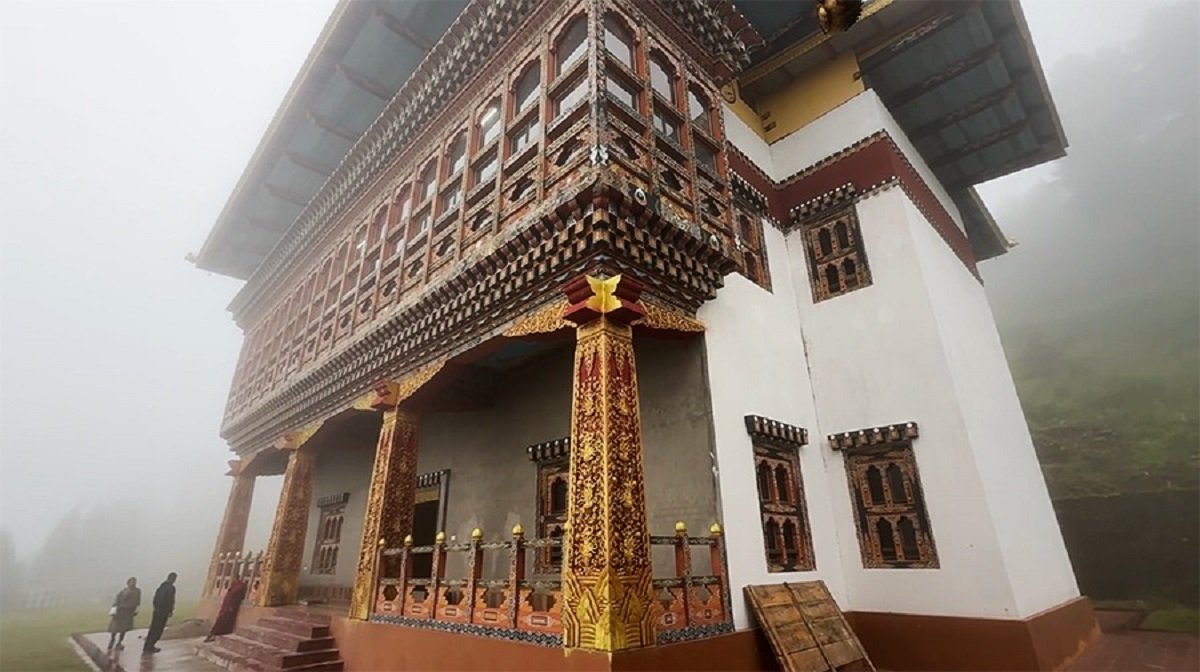
A three-storey temple taking shape in Chhukha’s Bjabchho Gewog is the result of a community effort involving hundreds of households and more than Nu 40 M in investment. With construction now 90 per cent complete, the temple is set to replace an ageing structure that has struggled to accommodate the community.
For years, the Bjabchho Community Temple has served as a spiritual and cultural hub for the people of the gewog.However, the old temple has deteriorated over the years. The earthquakes have left cracks in the walls. Its limited space has also made it difficult to accommodate people during religious events and funeral rites.
Bjabchho Gup Tashi said, “In the past, it has been inconvenient because of the limited space. Moreover, the condition of the temple has deteriorated over the years. The earthquakes made the situation worse, and many cracks have developed on the walls.”The project has cost more than Nu 40 M, with contributions from the gewog, residents and Chhukha Hydropower Corporation.
“The old temple was small and congested, especially when funeral rites and other religious events were organised here. Since it is an old temple, its condition has also deteriorated over the years. We are eagerly waiting and excited for the new temple to be completed because it is really going to benefit the people,” said Thinley Namgay, a resident of Bjabchho Gewog.
Penjor Dorji, another resident, said that the temple was badly damaged by the earthquakes. “This posed serious risks not only to the relics but also to the people visiting the temple. Therefore, the construction of the new temple will greatly benefit the community.”
The old temple is believed to have been established in the 17th century. According to locals, the temple was initially located on a mountain opposite its present location.
“Initially, the temple is said to have been located on the mountain opposite its current location. According to history, a fire destroyed the structure, which is why we do not have many scriptures today. However, the main relic, known as a ‘Phub’, is said to have flown to this location, where it was found by a hermit known as Tsam Meto Pelzang. A temple was then built here,” said the Gup.