

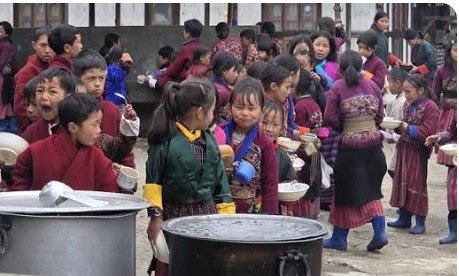
Children across Bhutan are increasingly surrounded by packaged snacks, sugary beverages, and fried foods, stoking severe public health concerns regarding rising childhood obesity and poor nutritional habits. According to the “Nourishing Bhutan: Framework for Action” report, the prevalence of overweight children aged 5 to 19 tripled between 2000 and 2022, climbing sharply from 6 to 18 percent. Clinical experts, including JDWNRH Department of Nutrition and Dietetics Head Tenzin Wangchuk and Health Ministry Nutrition Specialist Hari Prasad Pokhrel, warn that ultra-processed and deeply fried foods deliver empty calories, excessive sodium, and harmful trans fats, directly contributing to early-onset non-alcoholic fatty liver disease and metabolic disorders among adolescents. Although vendors outside school premises regularly sell instant noodles and deep-fried items, educational institutions across Bhutan are aggressively taking measures to foster healthier eating environments. At Ridaza Primary School in Monggar, Principal Singye explains that student captains conduct daily morning gate checks to seize junk food, returning it only when students depart so that their appetite for nutritious lunches remains intact. Complementing these local efforts, Sangay Chophel, Chief Programme Officer at the Ministry of Education and Skills Development (MoESD), emphasized that national policy strictly forbids junk food on campus, mandates “green days,” and oversees nutrition across more than 450 feeding schools by serving meat, eggs, milk, fruits, and vegetables. Furthermore, by 2027, the ministry aims to implement World Health Organisation-backed health-promoting school frameworks nationwide. However, authorities acknowledge that managing children’s food choices beyond the school boundary remains a significant obstacle. Chophel noted that while schools successfully control campus diets, parent collaboration is critical to eliminate daily pocket money and monitor off-campus eating. Compounding the issue are economic factors, as UNICEF Health and Nutrition Officer Kinley Dorji highlights that unhealthy snacks and packaged noodles remain significantly cheaper and more accessible than fresh vegetables and wholesome foods. Addressing this systemic crisis effectively requires a synchronized effort involving parents, educational leaders, local business owners, and national policy architects to ensure nutritious food choices become both affordable and accessible for every young student throughout Bhutan.