

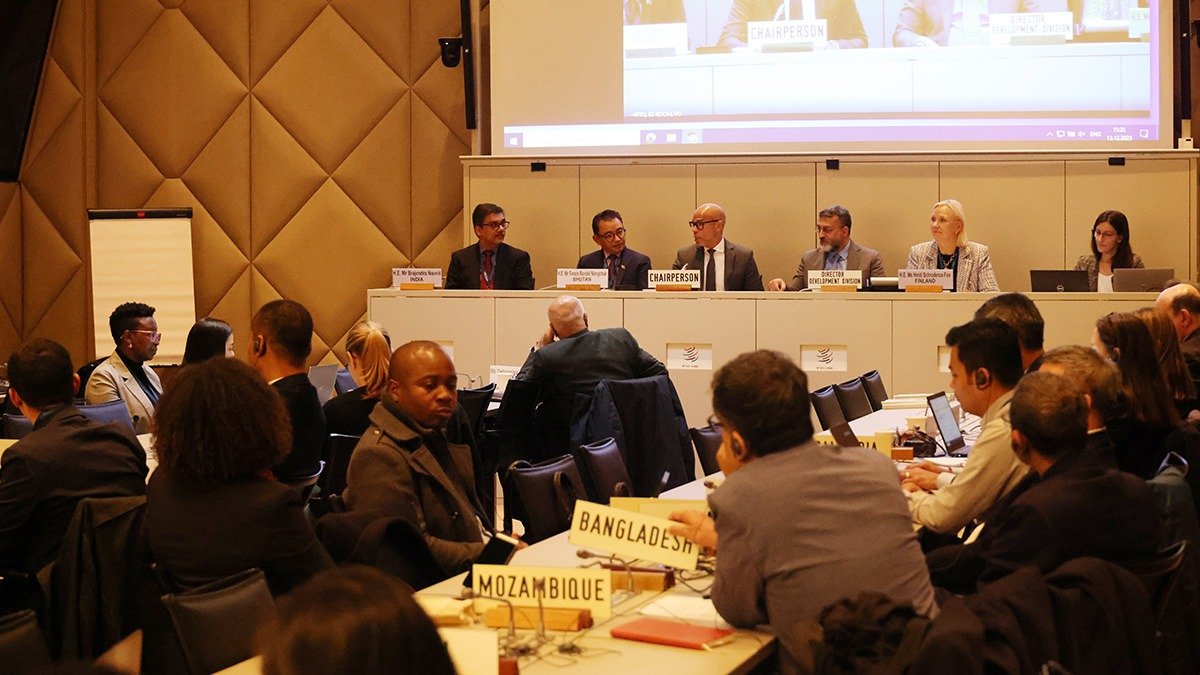
Bhutan has officially resumed its accession process to the World Trade Organization (WTO) after a 17-year hiatus. Following Cabinet approval, the Ministry of Industry, Commerce and Employment finalized 17 essential technical documents for submission to the WTO Secretariat, marking a major milestone in the country’s global economic integration.
Bhutan initially applied for WTO membership in 1999, but negotiations stalled in 2008 due to concerns over domestic policy space and the potential impact on its unique Gross National Happiness (GNH) philosophy. However, as the nation prepares for its post-Least Developed Country (LDC) transition and targets high-income status, the government is adopting a “whole-of-government” strategy to expand exports beyond hydropower.
Department of Trade Director, Sonam Tshering Dorji, emphasized that joining the 166-member rules-based trading system will eliminate the need for tedious bilateral negotiations while offering vital frameworks for services and investment protections. Officials also noted that WTO accession will complement the development of the Gelephu Mindfulness City (GMC), boosting Bhutan’s international economic credibility.
While independent economists warn that complying with complex WTO rules could strain the small nation’s administrative and legal capacity, trade officials assure that foundations like the Department of Intellectual Property are already well-aligned with international standards. Furthermore, authorities downplayed risks to local businesses, noting that Bhutan’s free trade agreement with India means the private sector already operates in a highly liberalized environment.
UN experts suggest that instead of mass production, Bhutan can leverage WTO membership to promote niche, sustainable sectors like organic agriculture, wellness services, and clean energy—proving that global trade can harmoniously coexist with Gross National Happiness.