

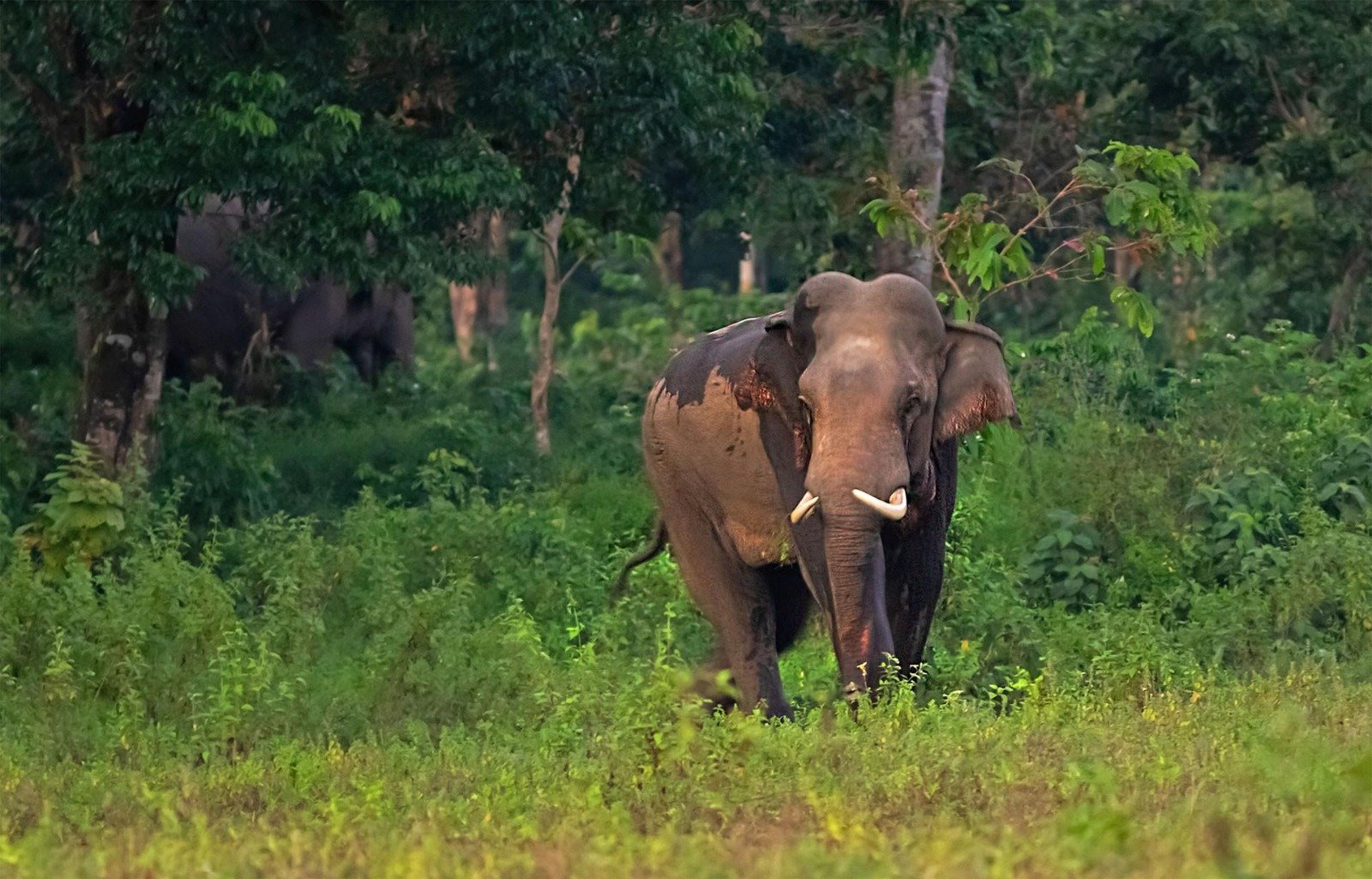
A fatal elephant attack in Tashicholing Gewog has reignited concerns over the growing challenge of managing human-elephant conflict in southern Bhutan.
A 59-year-old man was killed by a wild elephant early yesterday morning, intensifying debate over the effectiveness of mitigation measures such as solar electric fencing, elephant collaring, and rapid response systems in one of the country’s most conflict-prone regions.
Officials from the Samtse Forest Division said that although recent interventions have reduced the frequency of elephant intrusions into villages, elephants are increasingly adapting to existing barriers and identifying weaknesses in the system.
According to Chief Forestry Officer Kuenley Gyeltshen, the latest incident involved an aggressive tusker belonging to a herd led by a collared female elephant named Peldon.
“The tusker has become increasingly aggressive and has started entering through weak points in the fencing and alternative routes,” he said.
Forest officials now plan to collar the tusker to improve tracking and provide communities with timely movement alerts.
Authorities said 2.05 kilometres of solar electric fencing installed earlier this year had significantly reduced elephant intrusions, with only one or two major incidents recorded within five months of installation.
The fencing project, implemented in January in Tashicholing, covers areas from Singaygang to Lower Peljorling and Jogimara under a cost-sharing arrangement involving the WWF-IKI project, local communities, and the Divisional Forest Office.
Officials stressed that the fencing system was designed as a deterrent rather than an impenetrable barrier.
“The fully electrified fencing systems would involve high costs and could pose risks to both humans and elephants,” Kuenley Gyeltshen said, noting that the current design allows some flexibility to absorb pressure from elephant movement while minimising structural damage.
However, operational challenges remain, particularly during the monsoon season when cloudy weather weakens solar charging and reduces fence voltage.
Residents said elephants have increasingly learned to exploit these periods of low power supply to breach the fencing.
“The recent intrusion into the community did not occur through the fenced area, but through an alternative route that had rarely been used in the past,” said Biswana Uraon.
Authorities are now considering additional inner layers of fencing and backup power systems to strengthen protection in vulnerable areas.
Beyond fencing, the forest division has expanded elephant collaring and rapid response measures to improve community safety.
Last year, two elephants — Peldon and another tusker named Gembo — were fitted with tracking collars to monitor movement patterns and support early warning systems.
Officials said Peldon leads a herd that has reportedly grown from around 12 elephants to more than 40 as they move between Tashicholing and the Gyalsung area.
Gembo, meanwhile, is known for entering settlements and damaging property, particularly near the Budhuni landfill site where waste containing salt residue reportedly attracts elephants.
Real-time tracking now allows authorities to deploy Quick Response Teams whenever elephants approach villages or critical infrastructure.
In 2024 alone, elephants were linked to one human death, 32 cases of crop damage, and eight cases of property destruction in Samtse.
Damaged crops commonly include banana, betel nut, and paddy, while homes and storage sheds have also been affected.
“Despite repeated interventions and promises of coexistence, people in Sipsu continue to live in fear rather than peace,” said local resident Nir Kumar.
He said some families are now considering leaving their villages altogether because of the constant threat posed by elephant attacks.
Forestry officials said expanding settlements, industrial development, and infrastructure projects continue to shrink elephant habitats and migratory corridors, increasing encounters between wildlife and communities.
Authorities warned that habitat fragmentation, retaliatory actions, and pressure on elephant corridors pose serious long-term risks both to rural livelihoods and the conservation of Asian elephant populations in southern Bhutan.