

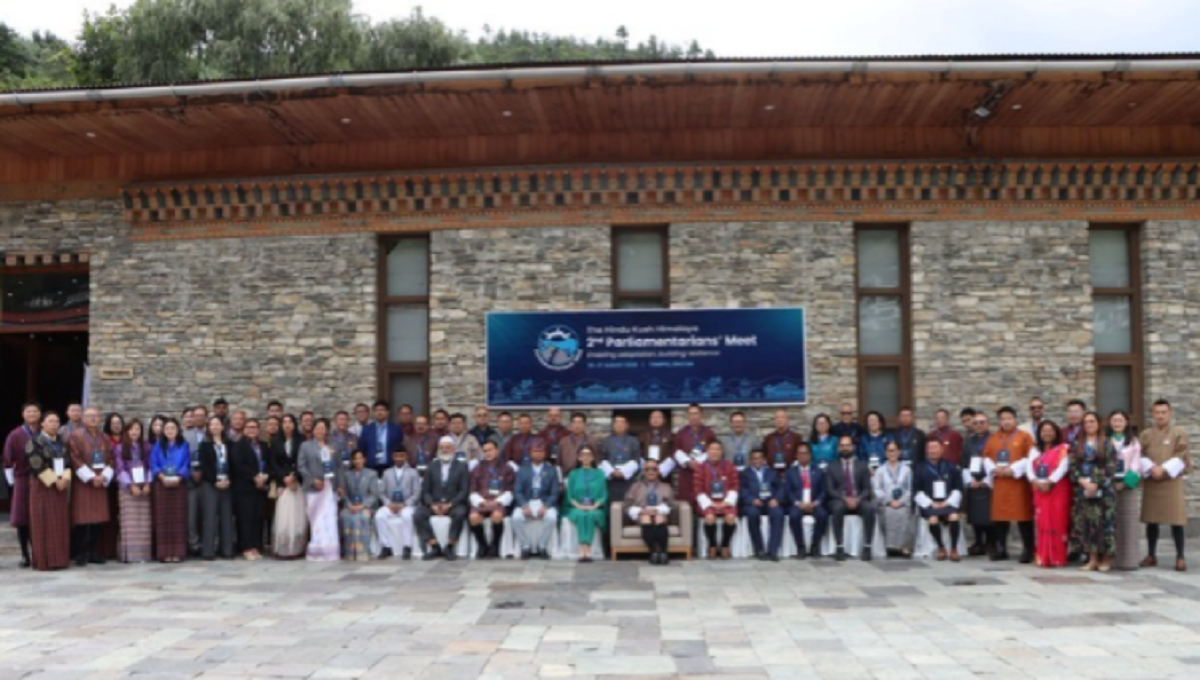
Eight countries, one region, and shared challenges. The Hindu Kush Himalaya region is facing growing threats from climate change. As glaciers recede rapidly, floods and landslides are becoming more frequent. The second Hindu Kush Himalaya Parliamentarians’ Meet brings together over 50 law makers and experts to address the challenges and foster regional cooperation in Thimphu. This follows the inaugural meeting held in Nepal last year, where parliamentarians and experts came together to understand the climate challenges facing each country.
What happens in the mountains does not remain there: the impacts echo far beyond. As the risks grow, so does the need to strengthen preparedness and resilience. Greater risks means even greater preparations. Adaptation, mountain resilience, climate finance, and related policy and legislative priorities are therefore high on the agenda.
“How can parliamentarians help address the impacts of climate change and whether there is a role for parliamentarians to be involved in the process, in the dialogue process, so that when they legislate, when they make laws, they have the right kind of information and the right kind of evidence to support the decisions that they take,” said Pema Gyamtsho (PhD), Director General, ICIMOD.
They are looking at how scientific data and evidence can be better incorporated into policies and translated into action to help countries adapt to the impacts of climate change. While also exploring how countries can better access climate finance.
“So our parliamentarians and representatives from the member countries will be discussing these issues and coming out with a statement, whether they feel this forum is useful or not. Secondly, what kind of role it could play and what kind of information it would require, and how it could make better laws, policies, and also how it can allocate more resources to various sectors facing the challenges from climate change,” added Pema Gyamtsho (PhD), Director General, ICIMOD.
“As parliamentarians, we have the responsibility to make laws, approve budgets and carry out oversight functions. If we are to address these challenges, these issues need to reach the Parliament. Last year’s meeting was mainly about developing a scientific understanding of global warming,” said Tashi Tenzin, MP, National Assembly.
Another key objective is to explore whether the parliamentary forum can be institutionalised.
“The main aim is to find ways to address these challenges for our people. Communities are already facing the impacts, and as representatives of the people, we need to discuss plans, solutions, and budgets together, not only as individual countries, but through regional collaboration. Ultimately, this collaboration can help address the challenges faced by each country,” added Tashi Tenzin, MP, National Assembly