

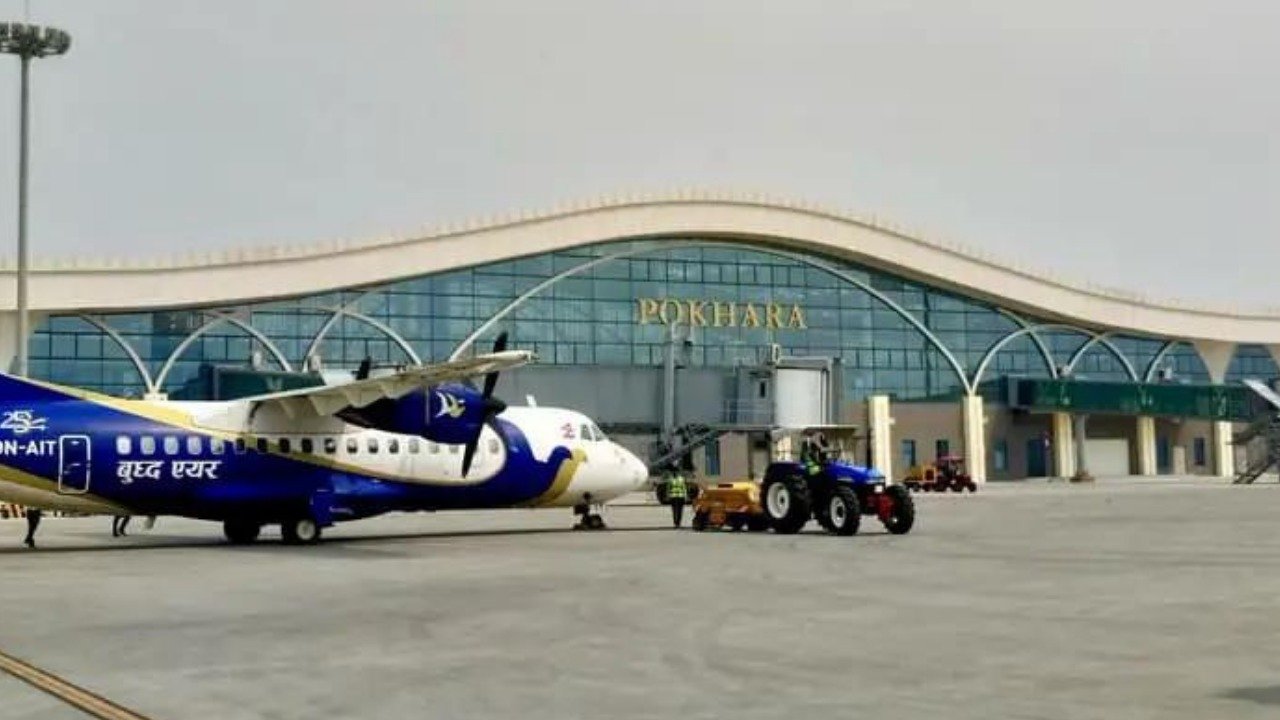
The Commission for Investigation of Abuse of Authority (CIAA) has filed a high-profile corruption chargesheet at the Special Court in Kathmandu, targeting 13 individuals over alleged financial irregularities totaling Rs 3.62 billion. The case centers on the construction of the Pokhara Regional International Airport, a National Pride Project. Among those charged are former Finance Minister Gyanendra Bahadur Karki, several high-ranking civil servants, and representatives of the Chinese contractor, China CAMC Engineering Co., Ltd.
The core of the CIAA’s investigation revolves around a sophisticated tax waiver scheme. According to the chargesheet, the original commercial contract between the Civil Aviation Authority of Nepal (CAAN) and China CAMC clearly stated that all taxes, duties, and charges were included in the contract price and were the responsibility of the contractor. However, a subsequent “Implementation Agreement” was allegedly executed to reverse these terms, effectively granting the contractor an illegal exemption from its fiscal obligations under Nepali law.
This maneuver created what the CIAA describes as a “double benefit” for the contractor. China CAMC received the full contract payment—which already factored in tax costs—while the corresponding tax amounts were never deposited into the state treasury. This resulted in a massive loss to the national exchequer, as the state essentially paid for taxes that were never collected.
The list of defendants reads like a roster of senior leadership. Beyond former Minister Karki, the accused include former Finance Secretary Shankar Prasad Adhikari, former Tourism Secretary Maheshwar Neupane, and former CAAN Director General Sanjeev Gautam. The CIAA has also named China CAMC Engineering, its Chairman Wang Bo, and Project Manager Yang Zhigang as defendants, charging them as abettors in the scheme.
The anti-graft body is seeking maximum penalties under the Prevention of Corruption Act, 2059. This includes imprisonment and fines equivalent to the misappropriated Rs 3.62 billion for the Nepali officials. For the most senior figures, additional punishments are being sought under Section 24 of the Act. As this landmark case moves to the Special Court, it stands as one of the most significant legal actions regarding foreign-assisted infrastructure projects in Nepal’s history.